Fundamental Law: Pope Leo XIV signs the new constitutional text of the Vatican City State
RomeMembers only 2 h agoAdd to bookmarks
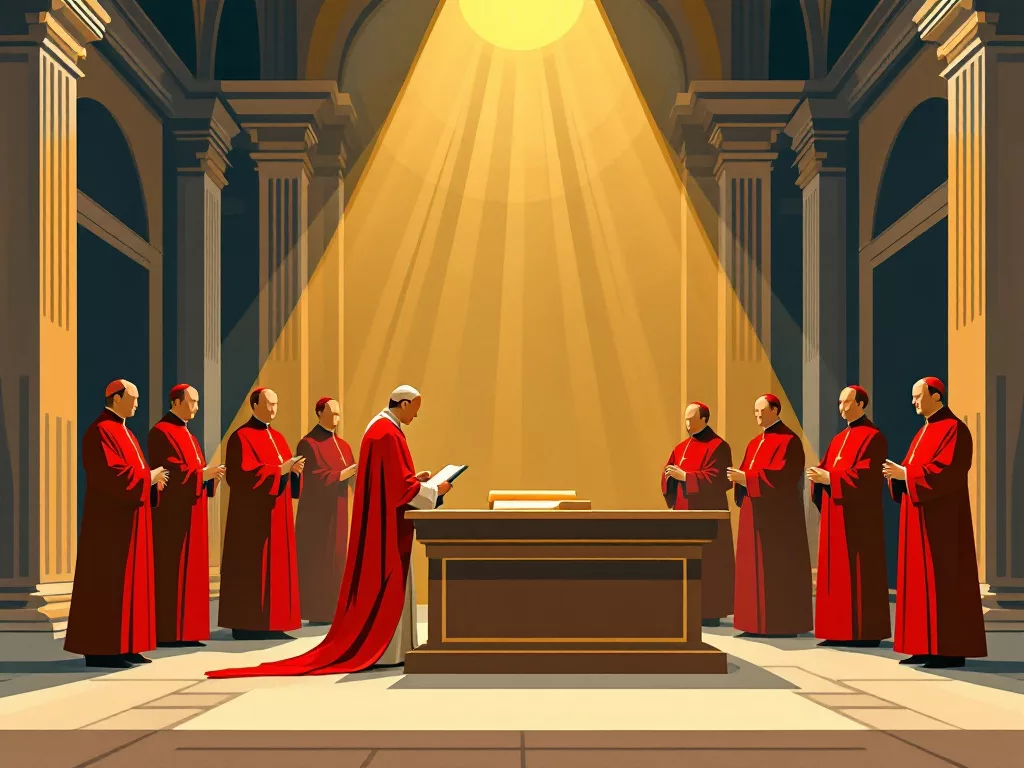
Three years after François' text (May 13, 2023), Leo XIV promulgates on July 31, 2026, a new Fundamental Law updating the organization of the State of the City—the fourth constitutional text since 1929.
Context
The State of the Vatican City, born from the Lateran Treaty of February 11, 1929, has successively adopted three Fundamental Laws: that of Pius XI (1929), that of John Paul II on November 26, 2000 (effective February 22, 2001), and that of Francis on May 13, 2023 (effective June 7, 2023). On July 31, 2026, Leo XIV signs the fourth constitutional text of the City, promulgated after barely three years of implementation of the previous one.
The Facts
The Zenit news agency confirms on July 31, 2026, the promulgation by Leo XIV of a new Fundamental Law "updating the organization of the State of the Vatican City." The text follows in the footsteps of the apostolic constitution Praedicate Evangelium (March 19, 2022), which reformed the Roman Curia without altering its fundamental canonical order. Detailed canonical commentaries will be needed to assess the exact scope of the changes introduced.
Doctrinal Analysis
Vatican temporal sovereignty is an instrument ordered to the freedom of the Petrine ministry. Vatican Council I, in the dogmatic constitution Pastor aeternus (July 18, 1870, Chapter III), defined the supreme jurisdiction of the Successor of Peter over the universal Church; it is the task of concordatory and state legal provisions to guarantee its public exercise. The Lateran Treaty of 1929, followed by the Fundamental Law of the same year signed by Pius XI, established the modern articulation between universal spiritual authority and international statehood.
Challenges for the Church
By promulgating a new text barely three years after that of his predecessor, Leo XIV demonstrates that the Roman institutional reform remains an ongoing project. For the faithful, the stakes go beyond legal technicalities: constitutional clarity conditions the orderly exercise of the Petrine governance. We had previously analyzed this same logic of administrative consolidation regarding the appointment of Giovanni Boscia to the IOR (July 16, 2026).
Critical Reading and Blind Spots
As the text has not yet been thoroughly analyzed by canonists, it is advisable to withhold judgment on the exact scope of the changes. Points to watch: the distribution of competencies between the Pontifical Commission for the State, the Secretariat of State, and the Governorate—a question on which the 2023 Law had already shifted the balance. Consistency with Praedicate Evangelium will be one of the evaluation criteria.
To Reflect Upon and Act
The State of the Vatican City is not a temporal monarchy inherited from the past: it is the legal framework for the freedom of the papacy. Prayer for the Supreme Pontiff, mentioned in the Roman Canon, remains the first concrete act by which the faithful support this visible freedom of the Successor of Peter.
Content reserved for members
Create a free account to access all our content and the weekly review.
Article produced by artificial intelligence, reviewed under human editorial control.
Story timeline
FSSPX: Leo XIV issues a final appeal before July 1st
- 1FSSPX: Leo XIV issues a final appeal before July 1st23/06/2026
- 2Traditionis Custodes in Kentucky: The Liturgical Wound Does Not Heal23/06/2026
- 3FSSPX: The final stretch before July 1st23/06/2026
- 4The homily is not secular: Rome closes the door to the German Synodal Way23/06/2026
- 5Rome closes the door on homilies: liturgy is not an open forum24/06/2026
- 6Detroit: 90 Parishes Without Sunday Mass, and the Archbishop Abolishes the Traditional Mass24/06/2026
- 7The homily remains reserved for ordained ministers: Rome definitively closes the door on the German Synodal Way24/06/2026
- 8FSSPX: A Declaration of Faith to Leo XIV, and the Validity of the Threat in Question24/06/2026
- 9The SSPX publishes a Catholic profession of faith: a gesture of clarity before July 1st25/06/2026
- 10The orientation of the Mass: a liturgical question that Leo XIV has not yet settled25/06/2026
- 11Father Nicola Bux to the Pope: "Do everything possible to overcome disagreements with the SSPX"25/06/2026
- 12Is the Threat of Excommunication by Cardinal Fernández Against the FSSPX Canonically Founded?25/06/2026
- 13FSSPX: A Priest Challenges the Canonical Validity of Cardinal Fernandez's Excommunication Threat25/06/2026
- 14FSSPX: A Profession of Faith Addressed to the Pope and Cardinals Before the Consistory25/06/2026
- 15Consistory of June 30: The Absences of Cardinals Zen, Erdő, and Eijk, a Signal Rome Cannot Ignore25/06/2026
- 16Open Letter to the SSPX: Franciscan Theologians Call for a Return to Unity26/06/2026
- 17Consistory of June 30: The absence of Zen, Erdo, and Eijk, a signal Rome cannot minimize26/06/2026
- 18Consistory of June 30: Leo XIV Opens the First Session Facing a Wounded World26/06/2026
- 19The Synodal Church Selects Its Future Priests: Are Young Men of Tradition Already Excluded?26/06/2026
- 20Swearing-in Ceremonies of July 1st: Between Canonical Intransigence and the Vatican's Presumed "Flexibility"27/06/2026
- 21Consistory J2: Leo XIV and the Cardinals Call for a "Civilization of Love" in the Face of the World's Wounds27/06/2026
- 22Coronations on July 1st: Cardinal Müller Draws the Line Between Tradition and Rupture28/06/2026
- 23Pope Leo XIV concludes the consistory: synodality, family, and a universal call for peace28/06/2026
- 24Grech: "The implementation of the Synod will not be a mere execution of decisions"28/06/2026
- 25The Eve of the Coronations: Müller, Conley, and Léon XIV Draw the Line29/06/2026
- 26On the eve of July 1st: ten priests ordained, Müller calls for a commission - the SSPX countdown29/06/2026
- 27On the Eve of Coronations: The Traditional Mass, a Path to Reconciliation?29/06/2026
- 28Burke cuts in before the coronations: "The current situation does not constitute a state of necessity"30/06/2026
- 29Léon XIV reforms the Vicariate of Rome: synodality at the heart of the local Church30/06/2026
- 30On the Eve of the Écône Consecrations: The Pope's Letter, Viganò, and Burke's Canonical Closure30/06/2026
- 31Ecône Consecrations: D-Day, Pagliarani Asks for Time, Viganò Denounces a "Rigged Game"30/06/2026
- 32The Consecrations of Écône: The Schism Consummated, Rome Facing the Moment of Truth01/07/2026
- 33After Écône: The SSPX Reaches Out, Rome Remains Silent01/07/2026
- 34FSSPX: Rome notifies excommunication - the schism enters into law02/07/2026
- 35After Écône: Müller for the Freedom of the Mass, Fernández for Dialogue02/07/2026
- 36FSSPX: Rome Opens the Narrow Door to Return to Communion02/07/2026
- 37FSSPX: Rome Outlines the Canonical Path to Return03/07/2026
- 38Léon XIV Adjusts the Governance of the Sovereign Order of Malta03/07/2026
- 39Cardinal Koch: The Stubborn Hope of a Possible Reconciliation After Excommunication03/07/2026
- 40Pagliarani on Rome: "These condemnations compel us to love the Holy Church even more"03/07/2026
- 41FSSPX: Pagliarani's public letter to Leo XIV - "Far from us the idea of separating"04/07/2026
- 42FSSPX and Traditionis Custodes: Gänswein Criticizes, Koch Holds Hope04/07/2026
- 43FSSPX: Tornielli and the Roman pedagogy of tearing05/07/2026
- 44FSSPX: after the schism, the question becomes that of the laity06/07/2026
- 45FSSPX: the Doctrinal Declaration refused in 2018, matrix of today's schism08/07/2026
- 46Bagnasco advocates for the coexistence between the traditional Mass and the Novus Ordo09/07/2026
- 47Cardinal Müller challenges Fernández: FSSPX confessions would be valid09/07/2026
- 48FSSPX: the canonical appeal filed, the schism enters its jurisdictional phase14/07/2026
- 49FSSPX: the canonical appeal filed, the schism enters the jurisdictional phase15/07/2026
- 50Vatican News: Giovanni Boscia appointed General Director, Léon XIV secures Vatican finances16/07/2026
- 51Cardinal Sarah: "The Church lacks authority to abolish the Latin Mass"17/07/2026
- 52**Pope Leo XIV and the Discreet Return to Liturgical Tradition: The Roman Way**18/07/2026
- 53FSSPX: Arrieta clarifies the canonical scope, Pagliarani defends the faithful20/07/2026
- 54Fundamental Law: Pope Leo XIV signs the new constitutional text of the Vatican City State31/07/2026


