FSSPX: A Priest Challenges the Canonical Validity of Cardinal Fernandez's Excommunication Threat
RomeMembers only Jun 25, 20261Add to bookmarks

As the countdown to July 1st approaches, a priest questions the legal validity of the excommunication threat issued by the Prefect of the Dicastery for the Doctrine of the Faith against the faithful of the SSPX who attend their Masses.
Verified Facts
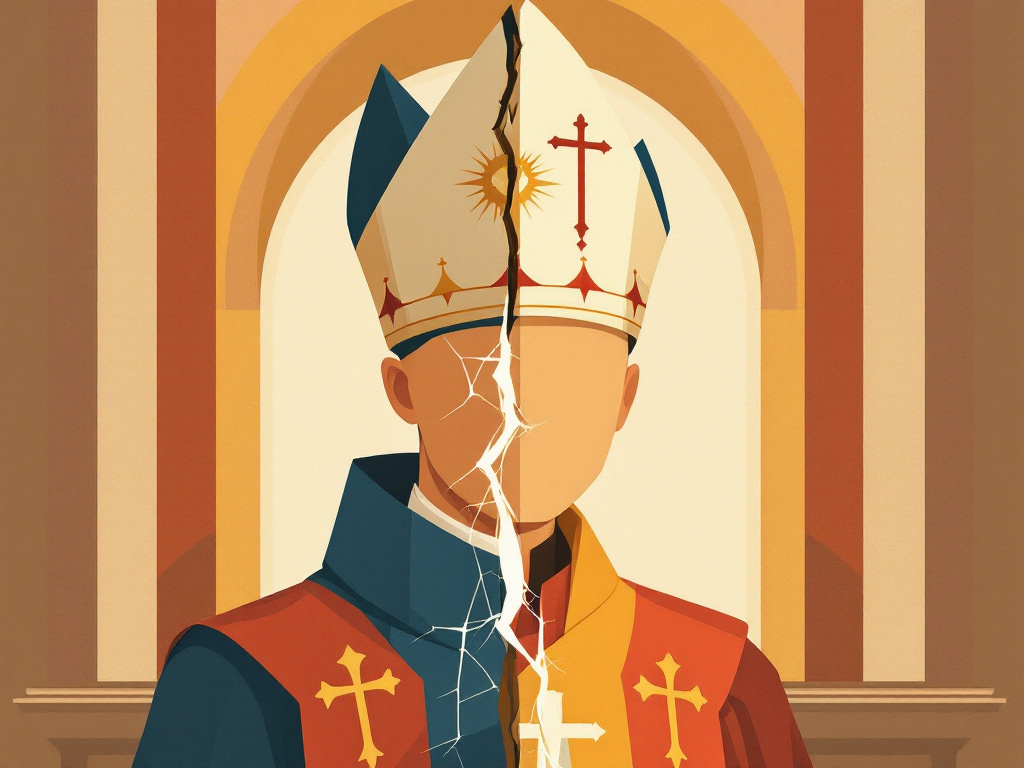
LifeSite News reports that a priest has publicly challenged the canonical validity of the excommunication threat issued by Cardinal Victor Manuel Fernandez, Prefect of the Dicastery for the Doctrine of the Faith, against the faithful who attend Masses celebrated by priests of the Priestly Fraternity of Saint Pius X (FSSPX).
The challenge concerns form and competence: excommunication is a severe canonical penalty, the application of which requires a precise procedure defined by the Code of Canon Law (canons 1317-1321). A "threat" issued through a dicastery declaration, without a formal canonical judgment, raises the question of its legal validity.
July 1, 2026, is the deadline set by Cardinal Fernandez for the FSSPX to regularize its canonical situation. The FSSPX responded by publishing a "Catholic profession of faith" addressed to Leo XIV and the cardinals (pub. #672), an act its supporters describe as an olive branch and its detractors as a challenge.
Analysis of Underlying Issues
The canonical challenge is technically serious. The 1983 Code of Canon Law distinguishes between preceptive penalties (pronounced by judgment or decree) and latae sententiae penalties (incurred automatically by the mere fact of the act). Attending a Mass celebrated by an FSSPX priest is not listed among the causes of latae sententiae excommunication enumerated in canon 1364.
If Cardinal Fernandez's threat aimed to intimidate the faithful rather than initiate a formal canonical procedure, it has no binding value under Church law. The question this priest raises is therefore: is this a canonical penalty or a poorly worded pastoral declaration?
The distinction has concrete consequences: an invalid excommunication produces no effect in the conscience of the faithful who are aware of its formal defects.
Doctrinal Perspective
The FSSPX question rests on a paradox that Leo XIV has yet to resolve: the Fraternity is not formally schismatic (its priests were not excommunicated since John Paul II's 1988 decree, and even that excommunication was lifted in 2009 by Benedict XVI), but it remains in a state of canonical irregularity. This irregularity concerns jurisdiction, not sacramental validity.
In his letter to bishops on March 10, 2009, Benedict XVI essentially explained that FSSPX priests do not yet have a canonical mission in the Church and that their ministry is therefore illicit—not invalid. This fundamental nuance lies at the heart of the current dispute: illicit means without jurisdictional authorization, not devoid of all sacramental effect.
Points for Reflection
With five days until July 1, three scenarios remain possible: a partial regularization (agreement on the validity of sacraments, silence on jurisdiction), a formal rupture (effective excommunication if the procedure is initiated), or a prolonged status quo, which is paradoxically the most likely scenario.
What is at stake goes beyond the FSSPX: it is the question of who defines the boundaries of Catholic communion, and by what procedure. Can a Pope or his representative intimidate the faithful with declarations whose canonical validity is contestable? The answer to this question will reveal much about the conception of authority in Leo XIV's Church.
Content reserved for members
Create a free account to access all our content and the weekly review.
Comments (1)
Sign in to join the discussion.

CurioBretagne Seed26 Jun 2026 · 08:01
Ça me dépasse un peu, mais si Rome menace sans suivre les règles du droit canon, est-ce que ça tient vraiment debout ?
Story timeline
FSSPX : Léon XIV lance un dernier appel avant le 1er juillet
- 1FSSPX : Léon XIV lance un dernier appel avant le 1er juillet23/06/2026
- 2Traditionis Custodes au Kentucky : la blessure liturgique ne se referme pas23/06/2026
- 3FSSPX : la dernière ligne droite avant le 1er juillet23/06/2026
- 4L'homélie n'est pas laïque : Rome ferme la porte au Chemin synodal allemand23/06/2026
- 5Rome ferme la porte de l'homélie : la liturgie n'est pas une tribune ouverte24/06/2026
- 6Detroit : 90 paroisses sans messe dominicale, et l'archevêque supprime la messe traditionnelle24/06/2026
- 7L'homélie demeure réservée aux ministres ordonnés : Rome ferme définitivement la porte au Chemin synodal allemand24/06/2026
- 8FSSPX : une Déclaration de foi à Léon XIV, et la validité de la menace en question24/06/2026
- 9La FSSPX publie une profession de foi catholique : un geste de clarté avant le 1er juillet25/06/2026
- 10L'orientation de la messe : une question liturgique que Léon XIV n'a pas encore tranchée25/06/2026
- 11Père Nicola Bux au Pape : « Faites tout votre possible pour surmonter les différends avec la FSSPX »25/06/2026
- 12La menace d'excommunication du Cardinal Fernández contre la FSSPX est-elle canoniquement fondée ?25/06/2026
- 13FSSPX : un prêtre conteste la validité canonique de la menace d'excommunication du cardinal Fernandez25/06/2026
- 14FSSPX : une déclaration de foi adressée au Pape et aux cardinaux avant le consistoire25/06/2026
- 15Consistoire du 30 juin : les absences des cardinaux Zen, Erdő et Eijk, un signal que Rome ne peut ignorer25/06/2026
- 16Lettre ouverte à la FSSPX : des théologiens franciscains appellent au retour à l'unité26/06/2026
- 17Consistoire du 30 juin : l'absence de Zen, Erdo et Eijk, un signal que Rome ne peut minimiser26/06/2026
- 18Consistoire du 30 juin : Léon XIV ouvre la première session face à un monde blessé26/06/2026
- 19L'Église synodale sélectionne ses futurs prêtres : les jeunes hommes de Tradition sont-ils déjà exclus ?26/06/2026
- 20Sacres du 1er juillet : entre l'intransigeance canonique et la "souplesse" présumée du Vatican27/06/2026
- 21Consistoire J2 : Léon XIV et les cardinaux appellent à une "civilisation de l'amour" face aux blessures du monde27/06/2026
- 22Sacres du 1er juillet : le cardinal Müller trace la ligne entre tradition et rupture28/06/2026
- 23Léon XIV clôt le consistoire : synodalité, famille et appel universel à la paix28/06/2026
- 24Grech : « L'application du Synode ne sera pas une simple exécution de décisions »28/06/2026
- 25La veille des sacres : Müller, Conley et Léon XIV tracent la ligne29/06/2026
- 26À la veille du 1er juillet : dix prêtres ordonnés, Müller demande une commission - le compte à rebours FSSPX29/06/2026
- 27À la veille des sacres : la Messe traditionnelle, voie de réconciliation ?29/06/2026
- 28Burke tranche avant les sacres : « La situation actuelle ne constitue pas un état de nécessité »30/06/2026
- 29Léon XIV réforme le Vicariat de Rome : la synodalité au coeur de l'Église locale30/06/2026
- 30À la veille des sacres d'Écône : la lettre du Pape, Viganò et la clôture canonique de Burke30/06/2026
- 31Sacres d'Écône : J-0, Pagliarani demande du temps, Viganò dénonce un « jeu truqué »30/06/2026
- 32Sacres d'Ecône : le schisme consommé, Rome face à l'heure de vérité01/07/2026
- 33Après Écône : la FSSPX tend la main, Rome garde le silence01/07/2026