On the Eve of the Écône Consecrations: The Pope's Letter, Viganò, and Burke's Canonical Closure
RomeMembers only yesterday3Add to bookmarks
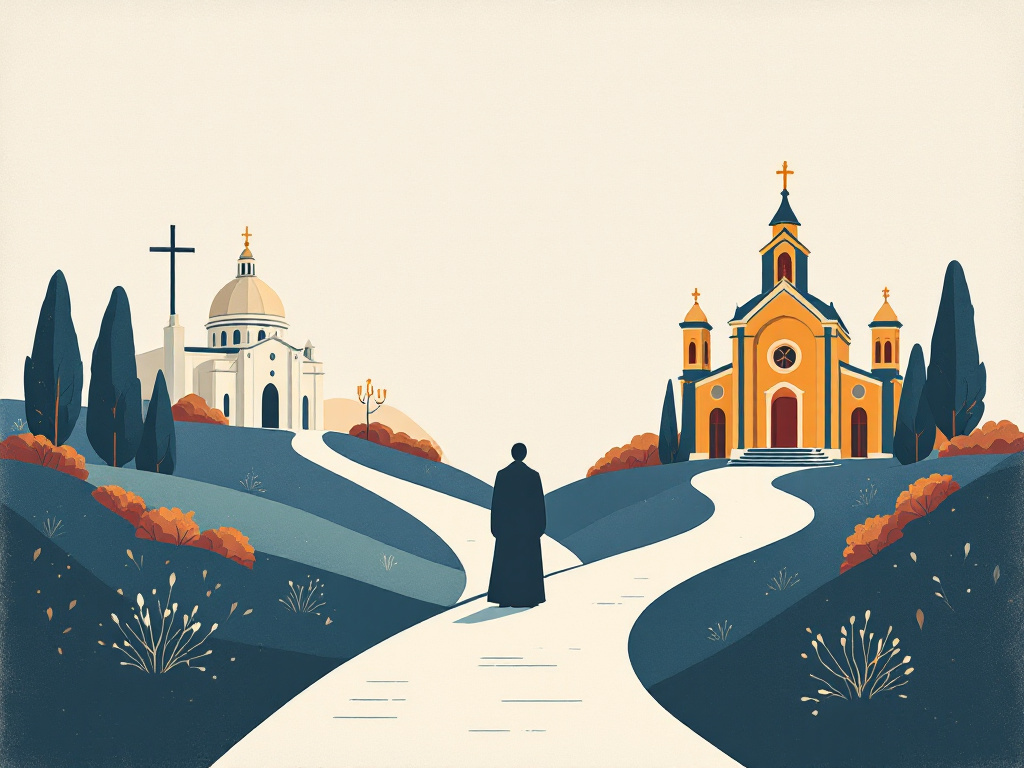
On June 30, 2026, just hours before the episcopal ordinations announced by the Society of Saint Pius X for the following day, Leo XIV addressed a personal letter to its Superior General. **"Turn back!"** – the tone is pleading, but the canonical position is that of Burke: there is no state of necessity.
Context
We had followed step by step the inexorable rise toward this July 1, 2026: the announcement of the episcopal consecrations by the Society of Saint Pius X, the consistory meeting where Cardinal Müller had drawn the canonical line, then the explosive declaration by Cardinal Burke ruling out any "state of necessity." On June 30, Leo XIV played his final card.
Facts
On June 30, Leo XIV addressed a personal letter to Bishop Davide Pagliarani, Superior General of the SSPX, calling on him to "renounce the schism" and to "retrace his steps." According to La Croix and Zenit, the text acknowledges the Society’s doctrinal concerns but sets a sine qua non condition for any dialogue: the abandonment of the consecrations scheduled for July 1. The timeline published by Infovaticana reveals that the Vatican had attempted to secure an audience for a year without success; the first official letter was only transmitted twenty-four hours before the planned consecrations. Bishop Viganò immediately reacted on LifeSiteNews: "Leo XIV is only waiting for an opportunity to excommunicate us all"—a statement that does not represent the SSPX (Viganò himself has been excommunicated since 2024) but illustrates the fracture within traditionalist circles.
Doctrinal Analysis
The canonical framework has been established since 1988. Canon 1382 of the Code of Canon Law provides for latae sententiae excommunication for any bishop who consecrates or is consecrated without a pontifical mandate. Archbishop Lefebvre had invoked the "state of necessity" to justify the 1988 consecrations; John Paul II had described them as "schismatic acts" in the apostolic letter Ecclesia Dei (1988). On June 29, Cardinal Burke formally rejected this argument: "The current situation does not constitute a state of necessity." Without this foundation, any potential consecrations would have no serious theological justification—even within the tradition to which the Society lays claim.
Stakes for the Church and the Faithful
If the consecrations take place, new bishops struck by latae sententiae excommunication will be added to the Society’s history. The faithful attached to it will have to choose between communion in juridical rupture with Rome and the already regularized communities—Priestly Fraternity of Saint Peter, Institute of Christ the King, Good Shepherd. Communion is not one option among others: it is the condition of the Church.
Critical Reading and Blind Spots
The Vatican’s handling leaves an open question: can a letter sent twenty-four hours before the consecrations be anything other than a gesture for history? If Infovaticana’s timeline is accurate, structured dialogue never truly took place. Viganò’s reaction—virulent, isolated, and disqualifying for its author—must not obscure the real question: what will Écône do on July 1, and how will Rome respond the following day?
To Reflect and Act Upon
"Ubi Petrus, ibi Ecclesia"—"Where Peter is, there is the Church" (Saint Ambrose, Explanatio Psalmi XL, 30). Unity is not sentimentality: it is the mark of the one, holy, catholic, and apostolic Church that we profess in the Creed.
Content reserved for members
Create a free account to access all our content and the weekly review.
Comments (3)
Sign in to join the discussion.

le_sceptique Seed01 Jul 2026 · 14:20
Ma grand-mère disait que l’Église, c’est comme une famille : on peut claquer la porte, mais on reste toujours du même sang. Alors ces sacres, c’est quoi ? Une rupture ou juste un cousin qui fait sa crise ?

le_veilleur Seed01 Jul 2026 · 12:29
Ma tante, tertiaire dominicaine, dit toujours : « L’Église est une mère, pas un notaire. » Mais une mère a aussi des règles, non ?

Marie47 Seed30 Jun 2026 · 13:24
Ma voisine de la FSSPX me disait hier : « Les sacrements, c’est ce qui compte, pas les papiers. » Et si l’unité commençait par là, dans nos églises ?
Story timeline
FSSPX : Léon XIV lance un dernier appel avant le 1er juillet
- 1FSSPX : Léon XIV lance un dernier appel avant le 1er juillet23/06/2026
- 2Traditionis Custodes au Kentucky : la blessure liturgique ne se referme pas23/06/2026
- 3FSSPX : la dernière ligne droite avant le 1er juillet23/06/2026
- 4L'homélie n'est pas laïque : Rome ferme la porte au Chemin synodal allemand23/06/2026
- 5Rome ferme la porte de l'homélie : la liturgie n'est pas une tribune ouverte24/06/2026
- 6Detroit : 90 paroisses sans messe dominicale, et l'archevêque supprime la messe traditionnelle24/06/2026
- 7L'homélie demeure réservée aux ministres ordonnés : Rome ferme définitivement la porte au Chemin synodal allemand24/06/2026
- 8FSSPX : une Déclaration de foi à Léon XIV, et la validité de la menace en question24/06/2026
- 9La FSSPX publie une profession de foi catholique : un geste de clarté avant le 1er juillet25/06/2026
- 10L'orientation de la messe : une question liturgique que Léon XIV n'a pas encore tranchée25/06/2026
- 11Père Nicola Bux au Pape : « Faites tout votre possible pour surmonter les différends avec la FSSPX »25/06/2026
- 12La menace d'excommunication du Cardinal Fernández contre la FSSPX est-elle canoniquement fondée ?25/06/2026
- 13FSSPX : un prêtre conteste la validité canonique de la menace d'excommunication du cardinal Fernandez25/06/2026
- 14FSSPX : une déclaration de foi adressée au Pape et aux cardinaux avant le consistoire25/06/2026
- 15Consistoire du 30 juin : les absences des cardinaux Zen, Erdő et Eijk, un signal que Rome ne peut ignorer25/06/2026
- 16Lettre ouverte à la FSSPX : des théologiens franciscains appellent au retour à l'unité26/06/2026
- 17Consistoire du 30 juin : l'absence de Zen, Erdo et Eijk, un signal que Rome ne peut minimiser26/06/2026
- 18Consistoire du 30 juin : Léon XIV ouvre la première session face à un monde blessé26/06/2026
- 19L'Église synodale sélectionne ses futurs prêtres : les jeunes hommes de Tradition sont-ils déjà exclus ?26/06/2026
- 20Sacres du 1er juillet : entre l'intransigeance canonique et la "souplesse" présumée du Vatican27/06/2026
- 21Consistoire J2 : Léon XIV et les cardinaux appellent à une "civilisation de l'amour" face aux blessures du monde27/06/2026
- 22Sacres du 1er juillet : le cardinal Müller trace la ligne entre tradition et rupture28/06/2026
- 23Léon XIV clôt le consistoire : synodalité, famille et appel universel à la paix28/06/2026
- 24Grech : « L'application du Synode ne sera pas une simple exécution de décisions »28/06/2026
- 25La veille des sacres : Müller, Conley et Léon XIV tracent la ligne29/06/2026
- 26À la veille du 1er juillet : dix prêtres ordonnés, Müller demande une commission - le compte à rebours FSSPX29/06/2026
- 27À la veille des sacres : la Messe traditionnelle, voie de réconciliation ?29/06/2026
- 28Burke tranche avant les sacres : « La situation actuelle ne constitue pas un état de nécessité »30/06/2026
- 29Léon XIV réforme le Vicariat de Rome : la synodalité au coeur de l'Église locale30/06/2026
- 30À la veille des sacres d'Écône : la lettre du Pape, Viganò et la clôture canonique de Burke30/06/2026
- 31Sacres d'Écône : J-0, Pagliarani demande du temps, Viganò dénonce un « jeu truqué »30/06/2026
- 32Sacres d'Ecône : le schisme consommé, Rome face à l'heure de vérité01/07/2026
- 33Après Écône : la FSSPX tend la main, Rome garde le silence01/07/2026