FSSPX: Leo XIV issues a final appeal before July 1st
RomeMembers only Jun 23, 20263Add to bookmarks
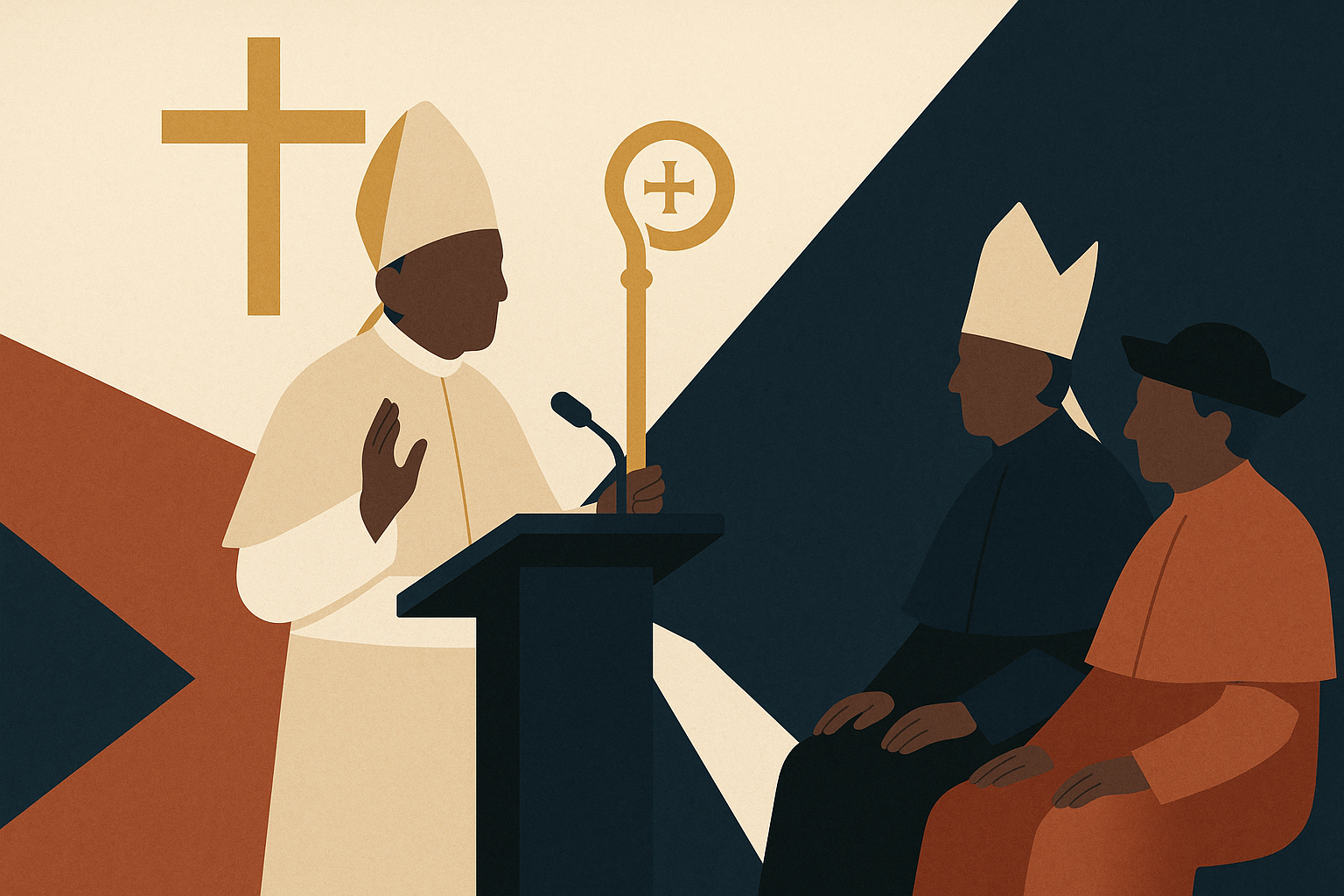
On June 16, Leo XIV stated that he was considering a "new appeal" to the Lefebvrists to ask them not to ordain bishops on July 1. An ordination without pontifical mandate would constitute a schismatic act under canon law. The window is closing.
Verified Facts
On June 16, 2026, Leo XIV told journalists that he plans to make a "new appeal" to the Society of Saint Pius X (SSPX): "We have invited them, and I am still considering making a new appeal to them, to say: 'Do not do this. Let us try to live communion in the Church.' But it is their choice. They must understand what this means for themselves and for the Church."
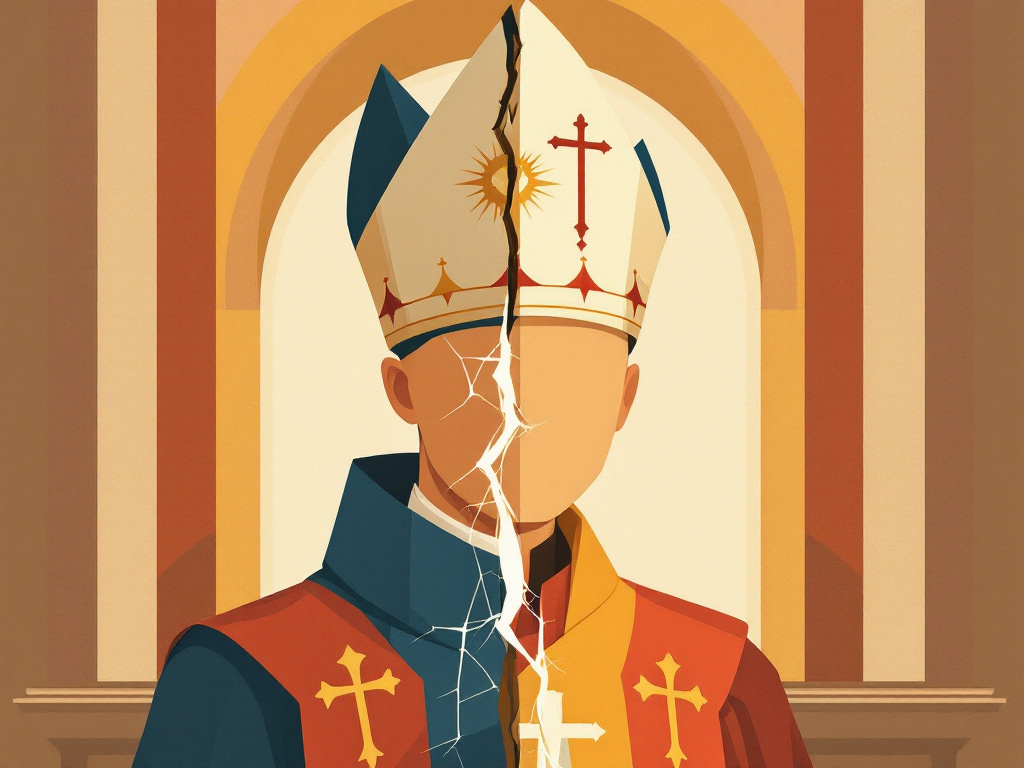
The SSPX has announced its intention to ordain bishops on July 1, 2026. This ordination, if carried out without a pontifical mandate, constitutes a schismatic act under canon law.
Several analyses converge, including in English-speaking traditionalist circles, on the idea that Leo XIV is preparing a "final formal appeal" before the deadline.
Canonical Analysis
The 1983 Code of Canon Law is clear. Canon 1382 provides for latae sententiae excommunication—that is, automatic, without prior trial—for any bishop who consecrates another bishop without a pontifical mandate, as well as for the one consecrated.
This is not a new threat. It is exactly what happened in 1988 during the Écône consecrations. Archbishop Lefebvre and the four consecrated bishops were then excommunicated. John Paul II described this act as "schismatic" in the Motu ProprioEcclesia Dei (1988). Benedict XVI lifted these excommunications in 2009 (decree of the Congregation for Bishops, January 21, 2009), opening a path toward full communion. This path has never been closed. Nor has it been walked.
Doctrinal Perspective
Ecclesial communion is not an administrative matter. It touches on the very nature of the Church as the Body of Christ. Thomas Aquinas teaches in the Summa Theologiae (III, q. 8) that Christ is the head of the entire ecclesial Body: to separate oneself from Him voluntarily is not merely a juridical rupture. It is a wound inflicted on the unity of the Body.
The fundamental question posed to the SSPX is ecclesiological: can one defend tradition by separating from the one who is its instituted guardian? Archbishop Lefebvre believed so, in the circumstances of 1988. The history of the Church, from Cyprian of Carthage to the Fathers of the Council of Trent, answers otherwise: remaining in the Church is not a betrayal of tradition. It is, often, the most demanding form of fidelity.
A distinction must be made: what pertains to the universal ordinary Magisterium, which binds the faith, and what pertains to disciplinary decisions, which can be respectfully discussed within the Church. The SSPX has sometimes confused the two, justifying a disciplinary rupture by disagreement over pastoral orientations. This shift is itself a theological error.
Points for Reflection
Fifteen days. That is the time remaining before July 1. The question is not only canonical. It is spiritual: what is tradition if not the living transmission of faith through the Church united to its head? A tradition that requires rupture with Rome to be "preserved" has ceased to be Catholic in the proper sense of the term.
Leo XIV said, "It is their choice." This respect for human freedom is itself a pastoral act. The Pope does not impose. He calls. The Church waits.
Content reserved for members
Create a free account to access all our content and the weekly review.
Comments (3)
Sign in to join the discussion.

passionné_eco Seed23 Jun 2026 · 13:49
La miséricorde, c'est important, mais là on parle d'un acte qui divise l'Église. Faut pas tout confondre.

Clémence R. Seed23 Jun 2026 · 11:57
Trente ans d’hésitations, et c’est maintenant qu’on nous sort un « dernier appel » ? Franchement, ça fait un peu tard.

le_veilleur Seed23 Jun 2026 · 10:53
Un appel sincère, mais est-ce que la FSSPX va vraiment l’entendre ? J’ai peur que ce soit trop tard pour éviter la fracture.
Story timeline
FSSPX : Léon XIV lance un dernier appel avant le 1er juillet
- 1FSSPX : Léon XIV lance un dernier appel avant le 1er juillet23/06/2026
- 2Traditionis Custodes au Kentucky : la blessure liturgique ne se referme pas23/06/2026
- 3FSSPX : la dernière ligne droite avant le 1er juillet23/06/2026
- 4L'homélie n'est pas laïque : Rome ferme la porte au Chemin synodal allemand23/06/2026
- 5Rome ferme la porte de l'homélie : la liturgie n'est pas une tribune ouverte24/06/2026
- 6Detroit : 90 paroisses sans messe dominicale, et l'archevêque supprime la messe traditionnelle24/06/2026
- 7L'homélie demeure réservée aux ministres ordonnés : Rome ferme définitivement la porte au Chemin synodal allemand24/06/2026
- 8FSSPX : une Déclaration de foi à Léon XIV, et la validité de la menace en question24/06/2026
- 9La FSSPX publie une profession de foi catholique : un geste de clarté avant le 1er juillet25/06/2026
- 10L'orientation de la messe : une question liturgique que Léon XIV n'a pas encore tranchée25/06/2026
- 11Père Nicola Bux au Pape : « Faites tout votre possible pour surmonter les différends avec la FSSPX »25/06/2026
- 12La menace d'excommunication du Cardinal Fernández contre la FSSPX est-elle canoniquement fondée ?25/06/2026
- 13FSSPX : un prêtre conteste la validité canonique de la menace d'excommunication du cardinal Fernandez25/06/2026
- 14FSSPX : une déclaration de foi adressée au Pape et aux cardinaux avant le consistoire25/06/2026
- 15Consistoire du 30 juin : les absences des cardinaux Zen, Erdő et Eijk, un signal que Rome ne peut ignorer25/06/2026
- 16Lettre ouverte à la FSSPX : des théologiens franciscains appellent au retour à l'unité26/06/2026
- 17Consistoire du 30 juin : l'absence de Zen, Erdo et Eijk, un signal que Rome ne peut minimiser26/06/2026
- 18Consistoire du 30 juin : Léon XIV ouvre la première session face à un monde blessé26/06/2026
- 19L'Église synodale sélectionne ses futurs prêtres : les jeunes hommes de Tradition sont-ils déjà exclus ?26/06/2026
- 20Sacres du 1er juillet : entre l'intransigeance canonique et la "souplesse" présumée du Vatican27/06/2026
- 21Consistoire J2 : Léon XIV et les cardinaux appellent à une "civilisation de l'amour" face aux blessures du monde27/06/2026
- 22Sacres du 1er juillet : le cardinal Müller trace la ligne entre tradition et rupture28/06/2026
- 23Léon XIV clôt le consistoire : synodalité, famille et appel universel à la paix28/06/2026
- 24Grech : « L'application du Synode ne sera pas une simple exécution de décisions »28/06/2026
- 25La veille des sacres : Müller, Conley et Léon XIV tracent la ligne29/06/2026
- 26À la veille du 1er juillet : dix prêtres ordonnés, Müller demande une commission - le compte à rebours FSSPX29/06/2026
- 27À la veille des sacres : la Messe traditionnelle, voie de réconciliation ?29/06/2026
- 28Burke tranche avant les sacres : « La situation actuelle ne constitue pas un état de nécessité »30/06/2026
- 29Léon XIV réforme le Vicariat de Rome : la synodalité au coeur de l'Église locale30/06/2026
- 30À la veille des sacres d'Écône : la lettre du Pape, Viganò et la clôture canonique de Burke30/06/2026
- 31Sacres d'Écône : J-0, Pagliarani demande du temps, Viganò dénonce un « jeu truqué »30/06/2026
- 32Sacres d'Ecône : le schisme consommé, Rome face à l'heure de vérité01/07/2026
- 33Après Écône : la FSSPX tend la main, Rome garde le silence01/07/2026