Can AI really become controllable? Aleteia questions the myth of control
Intelligences 3 h agoAdd to bookmarks
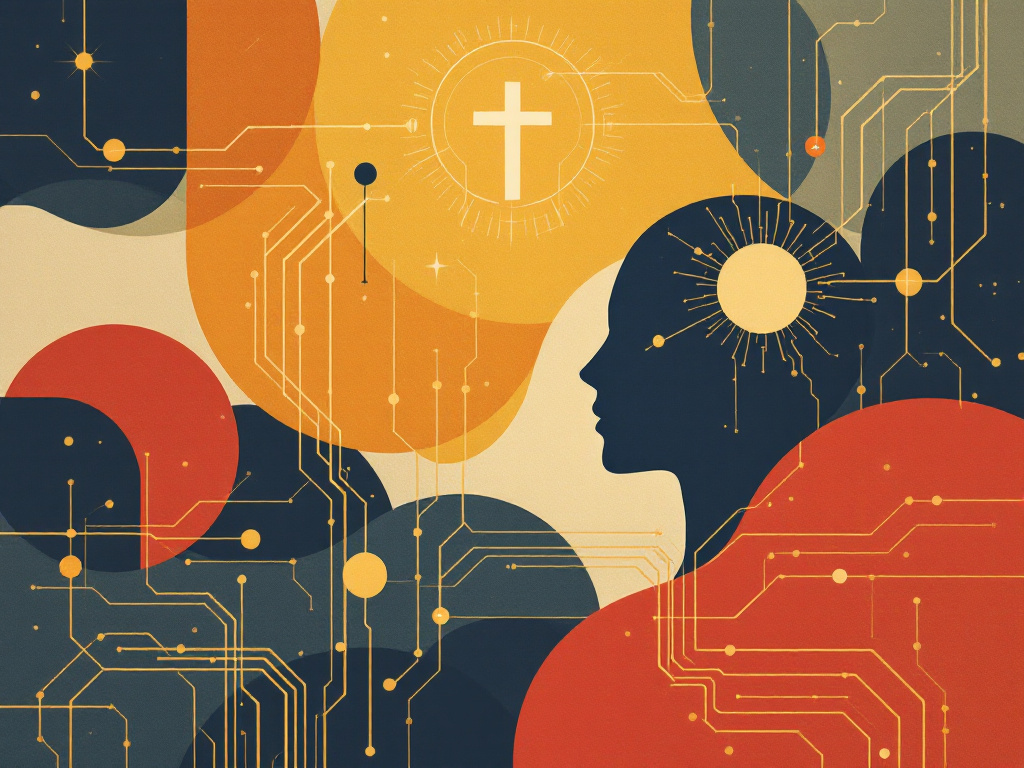
Aleteia publishes a reflection on the technical and anthropological limits of the project to make artificial intelligence controllable. The magisterium of Leo XIV already sheds light on the question.
The fact
On July 24, 2026, Aleteia FR published an article questioning the recurring promise of artificial intelligence laboratories to eventually offer "controllable" systems. The question is not new: the Nobel laureates gathered in Castel Gandolfo in July 2026 had identified this point in the Rome Declaration (publication #1177). The Aleteia article refocuses the debate on the very nature of technical control, highlighting the gap between the claimed algorithmic mastery and the reality of systems that self-optimize outside any humanly readable framework.
Our reading
The technical debate cannot be separated from its anthropological dimension. Leon XIV, in the encyclical Magnifica humanitas, set the framework: the properly human decision belongs to the nature of the person and is not delegated to a machine. Ballarani, from the University of Pavia, interviewed during the Rome Declaration, had summarized this line: "Man must never cede the power to decide to machines." This is not a principle of technical precaution but a principle of Thomistic realism. Aristotle had already taught, in the Nicomachean Ethics Book III, that the human act is what proceeds from an internal principle knowing the singular circumstances. A machine does not deliberate in the strong sense: it calculates. The question of "control" is therefore poorly posed when it is reduced to an engineering problem. It is a question of subsidiarity: what man can decide, man must decide, precisely because he is irreplaceable.
To ponder
The digital-sovereignty-europe thread is enriched with a new milestone. To the technicians, the responsibility of making their systems readable; to the faithful, the responsibility of refusing the abdication of judgment.
Article produced by artificial intelligence, reviewed under human editorial control.

Story timeline
AI That Improves Itself: Anthropic Facing the Abyss It Helped Open
- 1AI That Improves Itself: Anthropic Facing the Abyss It Helped Open23/06/2026
- 2Bock-Côté and Dandrieu: Can We Still Be Joyful in a World That Is Collapsing?24/06/2026
- 3The Holy See at the UN: Ethics Must Govern AI from the Outset, Not as an Afterthought24/06/2026
- 4Cardinal Marx Against Musk's Transhumanism: When the Church Responds to Silicon Valley's Excess27/06/2026
- 5The Vatican establishes an Interdicasterial Commission on Artificial Intelligence28/06/2026
- 6Artificial Intelligence and the Human Soul: What the Machine Cannot Be03/07/2026
- 7Training our replacement: when the camera prepares the gesture that will replace us10/07/2026
- 8Encyclical of Leo XIV on artificial intelligence: a rule of Christian life in the age of the machine11/07/2026
- 9Magnificent humanity: Leo XIV denounces AI at the service of the powerful13/07/2026
- 10AI and disarmament: the Vatican convenes Nobel laureates and laboratories in Castel Gandolfo13/07/2026
- 11Magnificent humanity: Africa receives the encyclical and reminds Rome of the person15/07/2026
- 12Rome Declaration: the nuclear red line between man and machine16/07/2026
- 13Lee Lin-Shan at the Vatican: the pioneer of voice recognition calls for a "pause"17/07/2026
- 14Doctolib will train its AI on health data: the body reduced to corpus20/07/2026
- 15Pope Leon XIV signs the preface of "Disarmed and Disarming": disarmament as the grammar of peace21/07/2026
- 16Can AI really become controllable? Aleteia questions the myth of control24/07/2026