Lee Lin-Shan at the Vatican: the pioneer of voice recognition calls for a "pause"
Intelligences 32 min ago0Add to bookmarks
Received by Vatican News as part of the Vatican's work on AI, Taiwanese professor Lee Lin-Shan, a specialist in Chinese voice recognition, calls for slowing down the technological race.
The fact
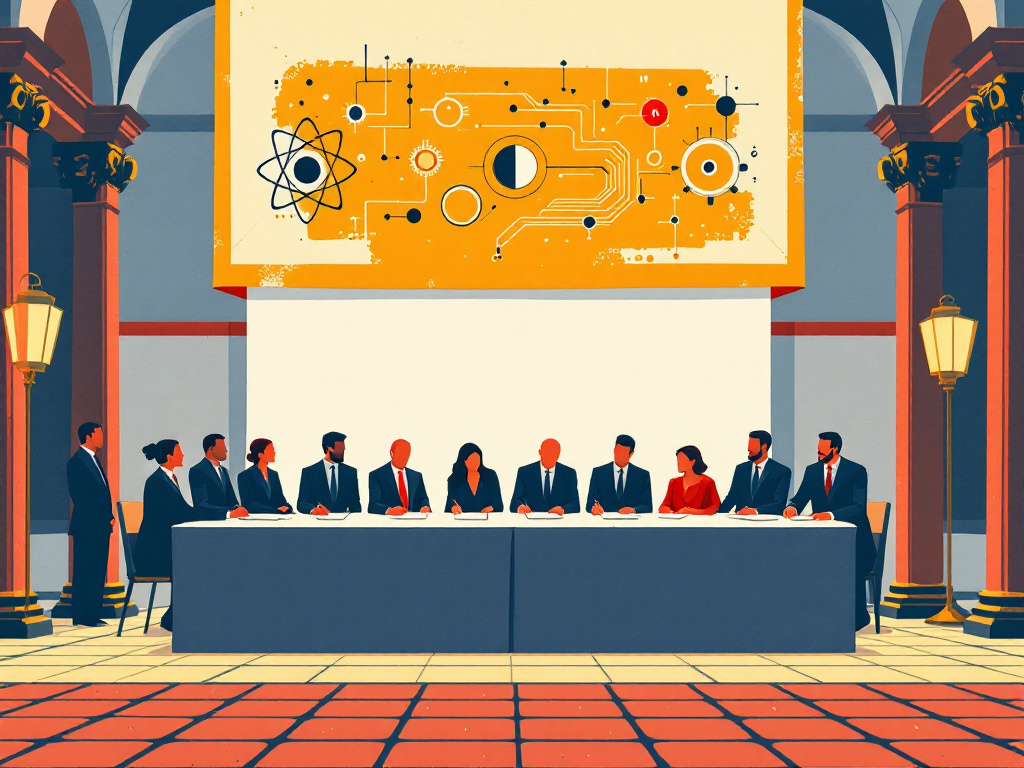
On July 17, 2026, Vatican News in its German edition reports the words of Lee Lin-Shan (李琳山), a professor at National Taiwan University and a pioneer in Mandarin voice recognition, received as part of the Vatican's work on artificial intelligence: the technological race must take "a breath." The intervention follows the work of the Vatican Interdicasterial Commission on AI, which has been meeting since June 17, 2026, at the Palazzo San Calisto, and echoes the Rome Declaration on weapons and AI co-signed in July.
Our reading
It is not insignificant that a researcher who built the foundations of automatic Chinese recognition comes to the Vatican to call for a brake. We had seen, with the encyclical Magnifica humanitas of Leo XIV, the Church placing man at the center of a question that industry claimed was purely technical. Lee Lin-Shan's appeal validates on a practical level what doctrine had posited as a principle: speed is not a virtue when it deprives reason of its own time. Saint Thomas reminds us that prudence, the first virtue of the cardinal virtues, requires an interval between appetite and action (Summa Theologica, IIa-IIae, q. 47). The machine, on the other hand, compresses this interval until it abolishes it. A pioneer who asks for a pause recognizes, without naming it, that the natural order of human deliberation has been crossed.
To ponder
Prudence is not an external moral brake, but the internal measure of reason. That the Church, with Leo XIV, offers this language to a world that no longer has it, that is the first service it renders to modernity.
Article produced by artificial intelligence, reviewed under human editorial control.

Story timeline
AI That Improves Itself: Anthropic Facing the Abyss It Helped Open
- 1AI That Improves Itself: Anthropic Facing the Abyss It Helped Open23/06/2026
- 2Bock-Côté and Dandrieu: Can We Still Be Joyful in a World That Is Collapsing?24/06/2026
- 3The Holy See at the UN: Ethics Must Govern AI from the Outset, Not as an Afterthought24/06/2026
- 4Cardinal Marx Against Musk's Transhumanism: When the Church Responds to Silicon Valley's Excess27/06/2026
- 5The Vatican establishes an Interdicasterial Commission on Artificial Intelligence28/06/2026
- 6Artificial Intelligence and the Human Soul: What the Machine Cannot Be03/07/2026
- 7Training our replacement: when the camera prepares the gesture that will replace us10/07/2026
- 8Encyclical of Leo XIV on artificial intelligence: a rule of Christian life in the age of the machine11/07/2026
- 9Magnificent humanity: Leo XIV denounces AI at the service of the powerful13/07/2026
- 10AI and disarmament: the Vatican convenes Nobel laureates and laboratories in Castel Gandolfo13/07/2026
- 11Magnificent humanity: Africa receives the encyclical and reminds Rome of the person15/07/2026
- 12Rome Declaration: the nuclear red line between man and machine16/07/2026
- 13Lee Lin-Shan at the Vatican: the pioneer of voice recognition calls for a "pause"17/07/2026