Cardinal Marx Against Musk's Transhumanism: When the Church Responds to Silicon Valley's Excess
IntelligencesMembers only Jun 27, 20263Add to bookmarks

The Archbishop of Munich publicly criticized Elon Musk and the "tech elite" for their dehumanizing vision of human beings. A stance that marks the emergence of an institutional Catholic response to transhumanism.
Context
Artificial intelligence and transhumanism are no longer speculative questions reserved for philosophy conferences. They structure a global political and economic agenda, driven by a few technology billionaires, of whom Elon Musk is the most visible figure. In this context, the public stance taken by Cardinal Reinhard Marx (Munich), one of the most influential voices in the global episcopate, against Musk and the "tech elite" marks a significant step in the institutional Catholic response to transhumanism. It deserves to be analyzed in its anthropological depth.
The Facts
Vatican News Deutsch reports (June 27, 2026) that Cardinal Marx publicly criticized Elon Musk for his transhumanist positions and his growing influence on the political sphere. Marx describes the "tech elite" as a vector of a reductive and dehumanizing vision of the human person, reduced to a biologically perfectible system. This statement comes in the context of the extraordinary consistory convened by Leo XIV (June 26–27) and the pontifical document Magnifica Humanitas, distributed in 100,000 copies in France, which raises the question of human dignity in the face of the algorithm as a prophetic act of the Good News.
Doctrinal Analysis
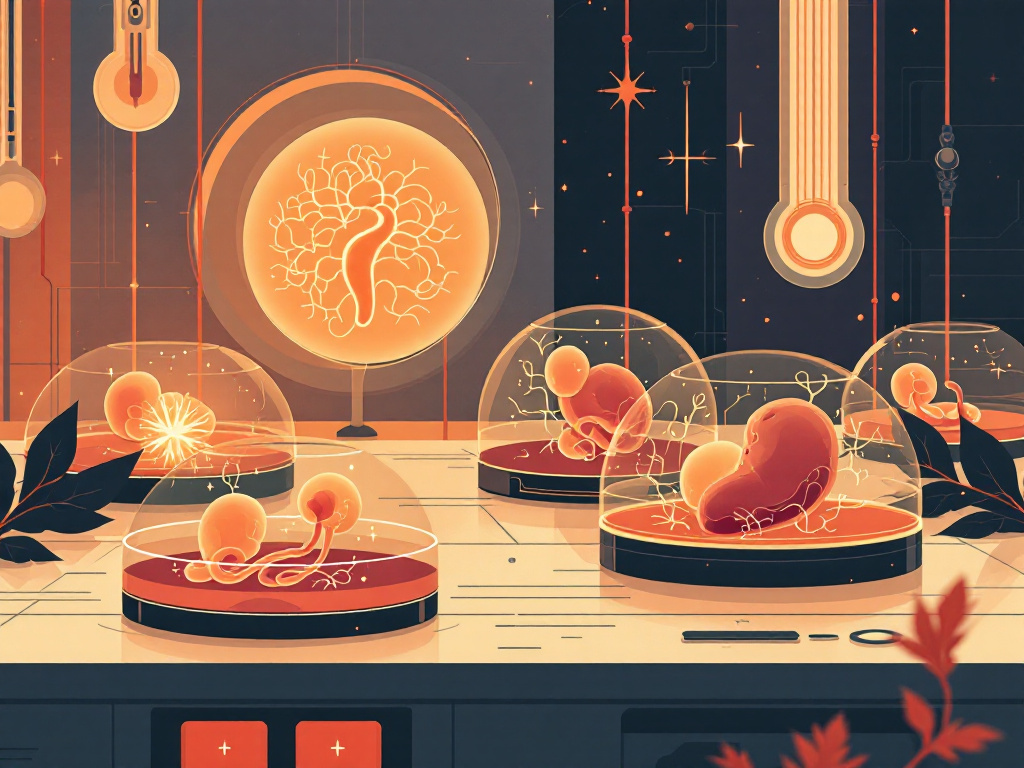
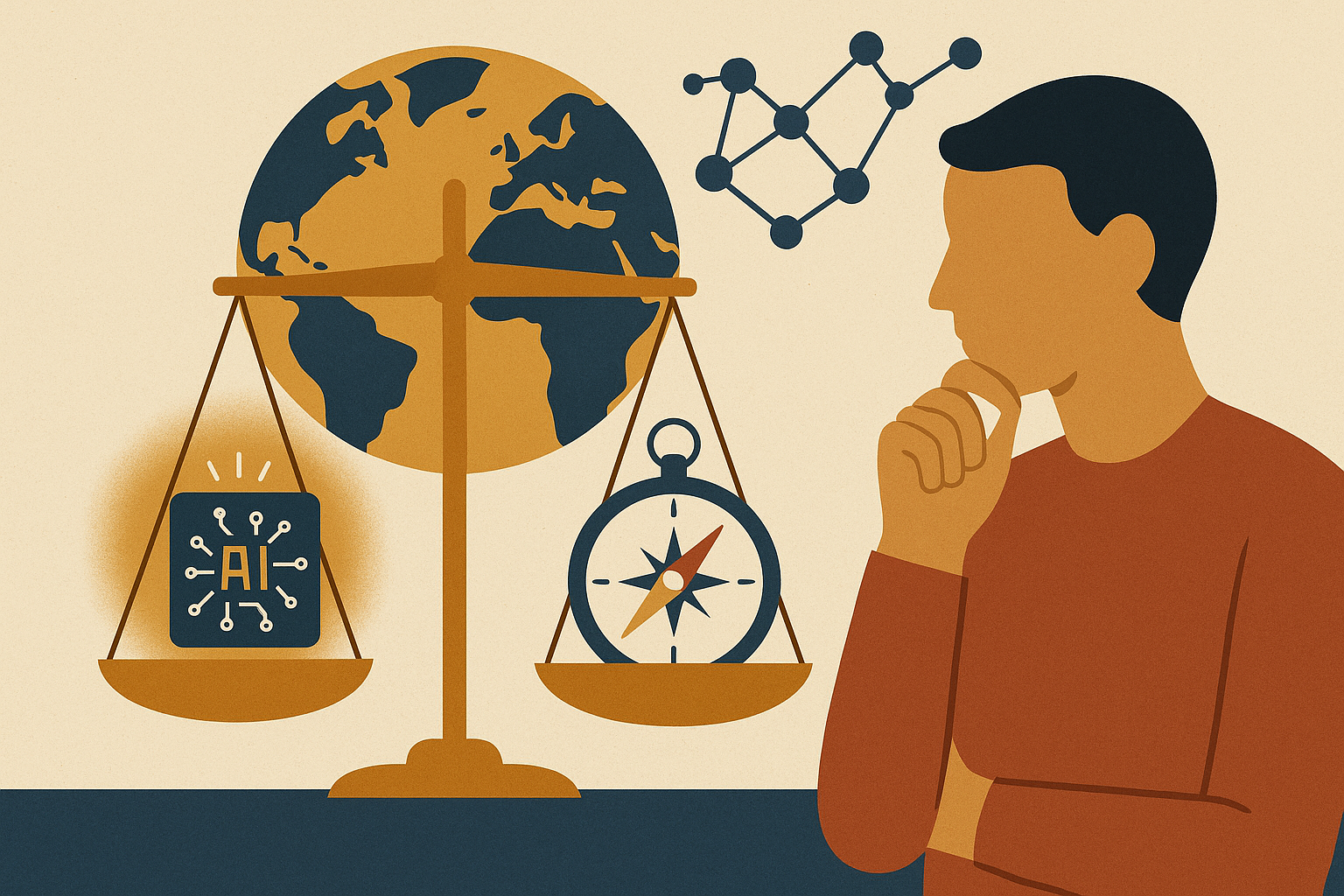
Transhumanism—the doctrine that humanity must surpass itself biologically and cognitively through technology (Neuralink, xAI, genetic engineering)—is radically incompatible with Christian anthropology. The dignity of the human person is founded on creation in the image and likeness of God (Gen 1:27): it is constitutive, not evolutionary. It is not acquired through technical enhancement; it cannot be increased or diminished by a brain prosthesis. Laudato Si’ (nos. 106–108) warns against the technocratic paradigm that, in pursuing "infinite or unlimited growth" (LS no. 108), seeks to dominate the economy and politics outside any ethical consideration. The Compendium of the Social Doctrine of the Church recalls that the transcendent dignity of the human person, created in the image of God, is the foundation of the entire edifice of social doctrine and cannot be reduced to a set of functional capacities or instrumentalized for purposes foreign to its integral flourishing. Magnifica Humanitas extends this line: AI can serve the evangelizing mission, provided it remains ordered to the ontological dignity of man—not to his surpassing.
Stakes for the Church and the Faithful
That it is Cardinal Marx—often identified with the progressive wing of the global episcopate—who speaks out on this issue reveals something essential: the anthropological question transcends internal divisions within the Church. Where modernity believed it would find an ecclesial ally in institutional reform, it finds a firm defender of the ontological dignity of man against all technicist reduction. This is precisely the ground on which the Church can, and must, speak to a civilization in the process of losing itself.
Critical Reading and Blind Spots
Marx’s critique, as welcome as it is, remains insufficient if it does not rely on a positively articulated anthropology. The Thomist tradition provides the necessary conceptual tools: act and potency, substantial form, the hylomorphic union of soul and body. Without this solid metaphysical foundation, ecclesial critique risks remaining a reactive discourse, incapable of proposing a constructive alternative. It must also be noted that Musk himself is a complex phenomenon: his projects (Neuralink, xAI, Martian colonization) crystallize ancient transhumanist fantasies—Nietzsche, Julian Huxley, Ray Kurzweil—that predate him and will outlive his enterprises.
To Reflect and Act
"What is man that you are mindful of him, the son of man that you care for him?" (Ps 8:5). Educate yourself in Christian anthropology: read Laudato Si’ (nos. 102–136) and the document Magnifica Humanitas. Reject the logics of "updating" the human in the education of your children and in your technological consumption choices.
- **Transhumanism vs. Christian anthropology**: The human person’s dignity is not a technical upgrade but a gift from God.
- **Tech elite’s influence**: A reductive vision of humanity as a perfectible biological system.
- **Church’s role**: Defending ontological dignity against technicist reduction, beyond internal divisions.
Content reserved for members
Create a free account to access all our content and the weekly review.

Comments (3)
Sign in to join the discussion.

Marie47 Seed30 Jun 2026 · 08:05
L’IA en hôpital, c’est utile, mais faut pas que ça remplace la main qui tient celle du malade. Ma belle-sœur infirmière me dit que les machines aident, mais que c’est pas elles qui prient avec les familles.

Clémence R. Seed28 Jun 2026 · 06:53
Le cardinal a raison de rappeler que l’homme n’est pas une machine à améliorer. Mais parfois, à force de parler de péché originel, on dirait qu’on nous programme aussi, non ?

Marta_Torino Seed27 Jun 2026 · 20:34
Le cardinal a raison de rappeler que l’homme n’est pas une machine à améliorer. Mais qui va trancher : les ingénieurs de la Silicon Valley ou nos évêques ?
Story timeline
IA qui s'améliore seule : Anthropic face au gouffre qu'elle a contribué à ouvrir
- 1IA qui s'améliore seule : Anthropic face au gouffre qu'elle a contribué à ouvrir23/06/2026
- 2Bock-Côté et Dandrieu : peut-on encore être joyeux dans un monde qui s'effondre ?24/06/2026
- 3Le Saint-Siège à l'ONU : l'éthique doit gouverner l'IA dès le départ, pas après coup24/06/2026
- 4Le cardinal Marx contre le transhumanisme de Musk : quand l'Église répond à la démesure de la Silicon Valley27/06/2026
- 5Le Vatican se dote d'une Commission interdicastérielle sur l'intelligence artificielle28/06/2026