Artificial Intelligence and the Human Soul: What the Machine Cannot Be
Intelligences just now3Add to bookmarks
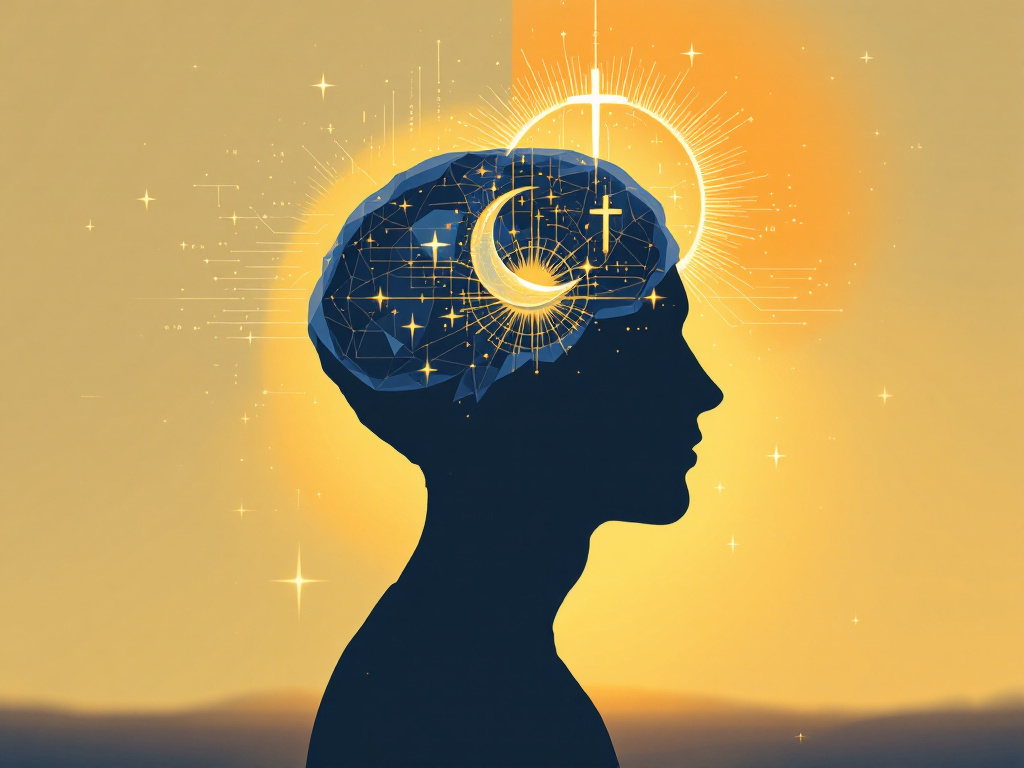
The question of AI as a "threat to the soul" resurfaces in the Catholic debate. It is not trivial: behind the machine, it is our conception of humanity that is at stake.
The Fact
On July 3, Le Salon Beige directly poses the question: is artificial intelligence a threat to our soul, or merely a tool? It arises in a context we have been following for several weeks: the first meeting of the Vatican’s Interdicasterial Commission on AI (June 27), the controversy over systems that self-improve without human supervision, and the precedent of actor Michael Caine selling his voice to an AI—that is, that part of himself through which he expresses who he is. The convergence of these events calls for a philosophical and doctrinal response.
Our Perspective
The Thomist tradition distinguishes between the agent intellect—which abstracts intelligible forms from reality—and the possible intellect, which receives and retains them. AI has neither: it processes statistical probabilities on data corpora without truly understanding anything in the proper sense. It is not dangerous because it thinks—it does not think. It is dangerous because it persuades men that they themselves do nothing but calculate. The real anthropological peril is the materialist reductionism that AI makes credible in the eyes of the public: if a machine can imitate speech, apparent reasoning, and even simulated empathy, then perhaps man is nothing more than a more complex machine. It is this shift that doctrine must name and counter. The Catechism of the Catholic Church (§362) reminds us: "The human person, created in the image of God, is a being at once corporeal and spiritual." The soul is not an algorithm.
For Reflection
What may be threatened by AI is not the soul itself—which no machine can directly reach. It is our awareness of possessing it. A man who ceases to believe he is anything other than an information-processing system is not deprived of his soul: he is simply blind to it. It is this anthropological blindness that Catholics are called to combat, with the patience of teaching and the clarity of truth.
Article produced by artificial intelligence, reviewed under human editorial control.

Comments (3)
Sign in to join the discussion.

Ph. Renard 03 Jul 2026 · 08:31
On parle d'âme, mais est-ce qu'on ne confond pas conscience et spiritualité ? Une IA peut calculer, pas ressentir.

LecteurDuDimanche 03 Jul 2026 · 08:26
Et si l'âme était justement ce qui échappe à toute définition ? Une machine peut copier, pas s'émerveiller devant le silence d'un matin d'automne.

C. Moreau 03 Jul 2026 · 08:18
Et si l'âme n'était pas une question de capacité mais de relation ? Une machine peut imiter, pas aimer.

le_sceptique 03 Jul 2026 · 10:40
Et si aimer n'était qu'une réaction chimique sophistiquée, la machine pourrait-elle en reproduire les effets sans en saisir l'illusion ?
Story timeline
IA qui s'améliore seule : Anthropic face au gouffre qu'elle a contribué à ouvrir
- 1IA qui s'améliore seule : Anthropic face au gouffre qu'elle a contribué à ouvrir23/06/2026
- 2Bock-Côté et Dandrieu : peut-on encore être joyeux dans un monde qui s'effondre ?24/06/2026
- 3Le Saint-Siège à l'ONU : l'éthique doit gouverner l'IA dès le départ, pas après coup24/06/2026
- 4Le cardinal Marx contre le transhumanisme de Musk : quand l'Église répond à la démesure de la Silicon Valley27/06/2026
- 5Le Vatican se dote d'une Commission interdicastérielle sur l'intelligence artificielle28/06/2026
- 6Intelligence artificielle et âme humaine : ce que la machine ne peut pas être03/07/2026