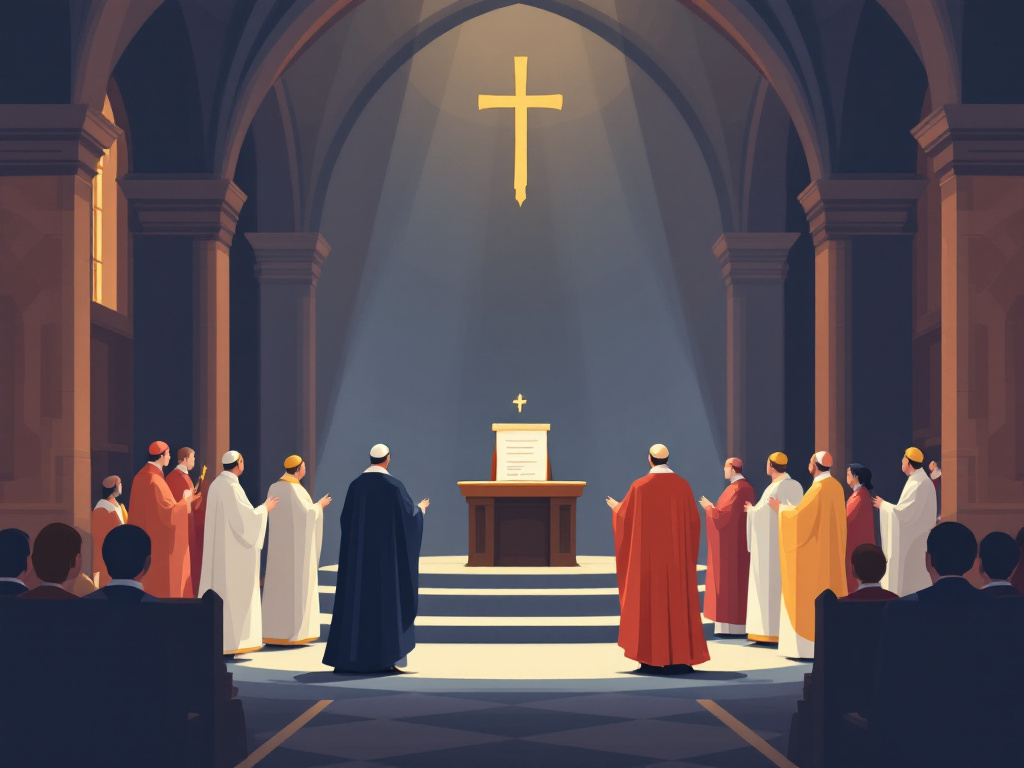
FSSPX: Rome notifies excommunication - the schism enters into law
RomeMembers only 3 h ago6Add to bookmarks

On July 2, 2026, the Holy See takes a decisive formal step: the canonical notification of excommunication for the four bishops consecrated without pontifical mandate in Écône. Canonical analysis and stakes for the faithful.
Context
We had followed the sequence of Roman warnings, the consecrations of July 1st in Écône, and the Fraternity of St. Pius X's initial cautious reaction. On July 2, 2026, the Holy See took a decisive formal step: the canonical notification of excommunication for the four bishops consecrated without a pontifical mandate.
Facts
Cardinal Parolin, Secretary of State, publicly declared that the episcopal ordinations of July 1st constituted a "schismatic act" deeply wounding "the unity of the Church." According to Catholic News Agency, the Vatican formally notified the four bishops of their latae sententiae excommunication, in accordance with canon 1382 of the Code of Canon Law. Le Salon Beige reports that the decree explicitly qualifies these consecrations as an "act of a schismatic nature resulting in latae sententiae excommunication." The SSPX, for its part, expressed sincere regret that these consecrations could not be conferred with the authorization of the Holy Father. Cardinal Fernández hinted that he hoped for future dialogue.
Doctrinal Analysis
Canon 1382 § 2 of the Code of Canon Law (1983) is clear: "A bishop who consecrates someone a bishop without a pontifical mandate, and the one who receives the consecration from such a bishop, incur latae sententiae excommunication reserved to the Apostolic See." This sanction is automatic and requires no prior judgment. John Paul II had followed exactly the same path in 1988, after the Écône consecrations by Archbishop Lefebvre: the decree of July 1, 1988, had acknowledged the excommunication and specified its canonical scope. The 2026 notification falls within this strict continuity. The Magisterium is not innovating: it is applying the universal law of the Church. Let us be clear: the sanction pertains to ecclesiastical positive law, not to a dogmatic definition; but it fully engages the authority of the Successor of Peter in disciplinary matters.
Stakes for the Church and the Faithful
The faithful attached to the traditional Mass who practice in SSPX chapels find themselves in a canonical situation now clarified by Rome with new legal precision. The excommunication of the bishops does not directly affect priests or the faithful, but it impacts the regularity of the entire hierarchical structure of the Fraternity. The question of the sacraments—validity and liceity—returns to the forefront. Cardinal Müller recalled that the solution lay in the full freedom granted to the extraordinary form of the Roman rite: this is the crux of the matter.
Critical Reading and Blind Spots
The SSPX maintains a paradoxical stance: it "regrets" not having had pontifical authorization while having consecrated without it. The dialogue promised by Cardinal Fernández remains an intention, not a formal commitment. The major blind spot is that of implementing decrees: what will be the practical scope of these excommunications? Will Rome instruct dioceses to refuse all cooperation with the SSPX, or will the notification remain primarily a legal act with symbolic significance? The answer determines the concrete life of tens of thousands of faithful.
To Reflect and Act Upon
"Est schismaticus qui nolens subiici Summo Pontifici et communicare cum membris Ecclesiae ei subiectis" (St. Thomas Aquinas, Summa Theologiae, II-II, q. 39, a. 1). Breaking with the Successor of Peter is never a trivial act, even when done with the best doctrinal intentions. Prayer for the unity of the Church and fidelity to the Chair of Peter remain the proper weapons of the faithful in these troubled times.
Content reserved for members
Create a free account to access all our content and the weekly review.
Comments (6)
Sign in to join the discussion.

Cla1re 02 Jul 2026 · 09:12
C'est vrai, une excommunication officielle, ça ne répare pas les cœurs. On a l'impression que ça va encore plus diviser.

C. Moreau 02 Jul 2026 · 08:39
Officiel, d'accord, mais ça change quoi pour nous, les fidèles de base ? On est toujours aussi perdus.

C.M. 02 Jul 2026 · 08:26
Vingt ans que cette blessure saigne, et une notification ne guérit pas une foi blessée.

Marie47 02 Jul 2026 · 08:23
Est-ce qu’on ne risque pas de transformer une douleur en procédure administrative ? La foi, ça se vit, pas ça se notifie.

LecteurDuDimanche 02 Jul 2026 · 08:06
Est-ce que cette notification changera vraiment quelque chose pour ceux qui prient déjà depuis des années dans ces chapelles ?

Th. Aubry 02 Jul 2026 · 07:43
Enfin une notification claire, mais est-ce que ça va vraiment ramener les fidèles à l’unité ou juste creuser le fossé ?
Story timeline
FSSPX : Léon XIV lance un dernier appel avant le 1er juillet
- 1FSSPX : Léon XIV lance un dernier appel avant le 1er juillet23/06/2026
- 2Traditionis Custodes au Kentucky : la blessure liturgique ne se referme pas23/06/2026
- 3FSSPX : la dernière ligne droite avant le 1er juillet23/06/2026
- 4L'homélie n'est pas laïque : Rome ferme la porte au Chemin synodal allemand23/06/2026
- 5Rome ferme la porte de l'homélie : la liturgie n'est pas une tribune ouverte24/06/2026
- 6Detroit : 90 paroisses sans messe dominicale, et l'archevêque supprime la messe traditionnelle24/06/2026
- 7L'homélie demeure réservée aux ministres ordonnés : Rome ferme définitivement la porte au Chemin synodal allemand24/06/2026
- 8FSSPX : une Déclaration de foi à Léon XIV, et la validité de la menace en question24/06/2026
- 9La FSSPX publie une profession de foi catholique : un geste de clarté avant le 1er juillet25/06/2026
- 10L'orientation de la messe : une question liturgique que Léon XIV n'a pas encore tranchée25/06/2026
- 11Père Nicola Bux au Pape : « Faites tout votre possible pour surmonter les différends avec la FSSPX »25/06/2026
- 12La menace d'excommunication du Cardinal Fernández contre la FSSPX est-elle canoniquement fondée ?25/06/2026
- 13FSSPX : un prêtre conteste la validité canonique de la menace d'excommunication du cardinal Fernandez25/06/2026
- 14FSSPX : une déclaration de foi adressée au Pape et aux cardinaux avant le consistoire25/06/2026
- 15Consistoire du 30 juin : les absences des cardinaux Zen, Erdő et Eijk, un signal que Rome ne peut ignorer25/06/2026
- 16Lettre ouverte à la FSSPX : des théologiens franciscains appellent au retour à l'unité26/06/2026
- 17Consistoire du 30 juin : l'absence de Zen, Erdo et Eijk, un signal que Rome ne peut minimiser26/06/2026
- 18Consistoire du 30 juin : Léon XIV ouvre la première session face à un monde blessé26/06/2026
- 19L'Église synodale sélectionne ses futurs prêtres : les jeunes hommes de Tradition sont-ils déjà exclus ?26/06/2026
- 20Sacres du 1er juillet : entre l'intransigeance canonique et la "souplesse" présumée du Vatican27/06/2026
- 21Consistoire J2 : Léon XIV et les cardinaux appellent à une "civilisation de l'amour" face aux blessures du monde27/06/2026
- 22Sacres du 1er juillet : le cardinal Müller trace la ligne entre tradition et rupture28/06/2026
- 23Léon XIV clôt le consistoire : synodalité, famille et appel universel à la paix28/06/2026
- 24Grech : « L'application du Synode ne sera pas une simple exécution de décisions »28/06/2026
- 25La veille des sacres : Müller, Conley et Léon XIV tracent la ligne29/06/2026
- 26À la veille du 1er juillet : dix prêtres ordonnés, Müller demande une commission - le compte à rebours FSSPX29/06/2026
- 27À la veille des sacres : la Messe traditionnelle, voie de réconciliation ?29/06/2026
- 28Burke tranche avant les sacres : « La situation actuelle ne constitue pas un état de nécessité »30/06/2026
- 29Léon XIV réforme le Vicariat de Rome : la synodalité au coeur de l'Église locale30/06/2026
- 30À la veille des sacres d'Écône : la lettre du Pape, Viganò et la clôture canonique de Burke30/06/2026
- 31Sacres d'Écône : J-0, Pagliarani demande du temps, Viganò dénonce un « jeu truqué »30/06/2026
- 32Sacres d'Ecône : le schisme consommé, Rome face à l'heure de vérité01/07/2026
- 33Après Écône : la FSSPX tend la main, Rome garde le silence01/07/2026
- 34FSSPX : Rome notifie l'excommunication - le schisme entre dans son droit02/07/2026
- 35Après Écône : Müller pour la liberté de la messe, Fernández pour le dialogue02/07/2026