After Écône: Müller for the Freedom of the Mass, Fernández for Dialogue
RomeMembers only 2 h ago3Add to bookmarks

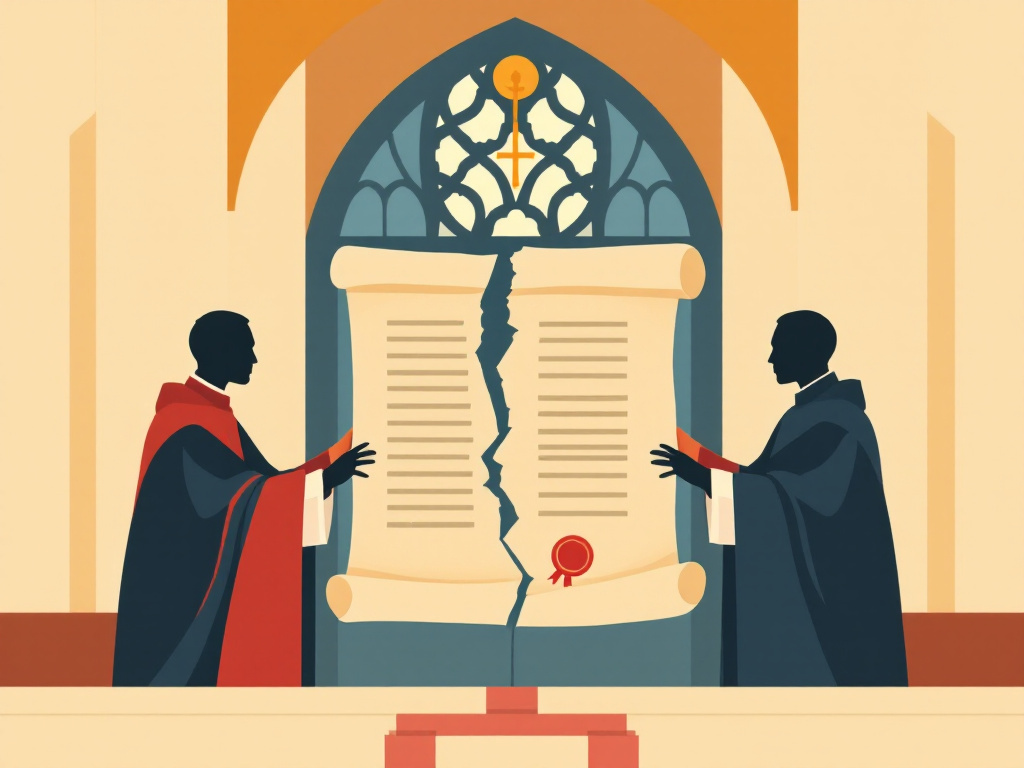
Two cardinals, two interpretations of the FSSPX crisis. While Rome has just notified the excommunication, Cardinal Müller deems *Traditionis Custodes* "without positive effect" and calls for full freedom for the traditional Mass. Cardinal Fernández leaves the door ajar for future dialogue.
Context
We had followed the canonical tragedy: the Pope's letter to Pagliarani, the consecrations of July 1st in Écône, the notification of excommunication on July 2nd. The schism is complete. But two Roman cardinals spoke out in the aftermath, revealing the crisis of discernment at the very heart of Rome.
The Facts
Cardinal Gerhard Ludwig Müller, emeritus prefect of the Dicastery for the Doctrine of the Faith, declared on July 1st to Il Giornale that Traditionis Custodes "has had no positive effect" and that it is appropriate to "restore full freedom for the traditional Mass," in line with Benedict XVI's Summorum Pontificum (2007). Simultaneously, Cardinal Víctor Manuel Fernández, the current prefect of the same Dicastery, told journalist Michael Haynes that the FSSPX had refused the Church's proposal—whose content remains unknown—adding: "We hope that dialogue will be possible in the future."
Doctrinal Analysis
A distinction is necessary. Traditionis Custodes is an act of the pontifical ordinary Magisterium, not a dogmatic definition. A cardinal may contest its pastoral opportuneness without formal dissent: this is the freedom recognized by canon 212 §3 of the CIC, which grants the faithful the right to express their opinion to pastors on matters concerning the good of the Church. But the simultaneity of this appeal with the consummated schism is troubling. The question remains: was Traditionis Custodes a cause of the FSSPX's radicalization, or was it a pretext? The line between cause and occasion is rarely clear-cut in the history of divisions (cf. CCC 817).
Stakes for the Church and the Faithful
For the Summorum Pontificum communities that have remained in obedience, Müller's intervention is a valuable signal: their fidelity is not to be confused with schism. For Rome, any revision of Traditionis Custodes in the weeks following the consecrations would risk being seen as a concession wrested by the rupture—something neither Leo XIV nor Cardinal Parolin seem prepared to grant.
Critical Reading and Blind Spots
What neither Müller nor Fernández reveal: the nature of the proposal submitted to Pagliarani before July 1st. Without this detail, no fair judgment is possible regarding the FSSPX's refusal. Roman opacity fuels speculation. The real work ahead concerns the implementing decrees: what canonical status for priests ordained by excommunicated bishops? Which sacraments for the faithful?
To Reflect and Act
"That they all may be one, as you, Father, are in me and I in you" (Jn 17:21). Unity is not a disciplinary option. For the faithful attached to the traditional Mass, the time is one of vigilance in obedience—not to be drawn into the wake of schism by liturgical solidarity. For Rome, the time is one of transparency: to state what was proposed, and what was refused.
- The schism is consummated after the consecrations of July 1st.
- Two cardinals express divergent views on *Traditionis Custodes*.
- The FSSPX's refusal of an undisclosed proposal remains unexplained.
- The canonical status of priests and sacraments post-schism is uncertain.
Content reserved for members
Create a free account to access all our content and the weekly review.
Comments (3)
Sign in to join the discussion.

Marie47 02 Jul 2026 · 09:28
Et si le vrai défi, c’était de faire coexister ces deux approches sans les opposer ? La liberté et le dialogue ne s’excluent pas.

C.M. 02 Jul 2026 · 09:21
Et si le vrai dialogue commençait par écouter ceux qui prient autrement sans les réduire à des « traditionalistes » ou des « progressistes » ?

Th. Aubry 02 Jul 2026 · 09:00
Müller a raison sur le fond : la liberté liturgique n’a jamais été un problème, mais une solution. Pourquoi en faire un champ de bataille ?
Story timeline
FSSPX : Léon XIV lance un dernier appel avant le 1er juillet
- 1FSSPX : Léon XIV lance un dernier appel avant le 1er juillet23/06/2026
- 2Traditionis Custodes au Kentucky : la blessure liturgique ne se referme pas23/06/2026
- 3FSSPX : la dernière ligne droite avant le 1er juillet23/06/2026
- 4L'homélie n'est pas laïque : Rome ferme la porte au Chemin synodal allemand23/06/2026
- 5Rome ferme la porte de l'homélie : la liturgie n'est pas une tribune ouverte24/06/2026
- 6Detroit : 90 paroisses sans messe dominicale, et l'archevêque supprime la messe traditionnelle24/06/2026
- 7L'homélie demeure réservée aux ministres ordonnés : Rome ferme définitivement la porte au Chemin synodal allemand24/06/2026
- 8FSSPX : une Déclaration de foi à Léon XIV, et la validité de la menace en question24/06/2026
- 9La FSSPX publie une profession de foi catholique : un geste de clarté avant le 1er juillet25/06/2026
- 10L'orientation de la messe : une question liturgique que Léon XIV n'a pas encore tranchée25/06/2026
- 11Père Nicola Bux au Pape : « Faites tout votre possible pour surmonter les différends avec la FSSPX »25/06/2026
- 12La menace d'excommunication du Cardinal Fernández contre la FSSPX est-elle canoniquement fondée ?25/06/2026
- 13FSSPX : un prêtre conteste la validité canonique de la menace d'excommunication du cardinal Fernandez25/06/2026
- 14FSSPX : une déclaration de foi adressée au Pape et aux cardinaux avant le consistoire25/06/2026
- 15Consistoire du 30 juin : les absences des cardinaux Zen, Erdő et Eijk, un signal que Rome ne peut ignorer25/06/2026
- 16Lettre ouverte à la FSSPX : des théologiens franciscains appellent au retour à l'unité26/06/2026
- 17Consistoire du 30 juin : l'absence de Zen, Erdo et Eijk, un signal que Rome ne peut minimiser26/06/2026
- 18Consistoire du 30 juin : Léon XIV ouvre la première session face à un monde blessé26/06/2026
- 19L'Église synodale sélectionne ses futurs prêtres : les jeunes hommes de Tradition sont-ils déjà exclus ?26/06/2026
- 20Sacres du 1er juillet : entre l'intransigeance canonique et la "souplesse" présumée du Vatican27/06/2026
- 21Consistoire J2 : Léon XIV et les cardinaux appellent à une "civilisation de l'amour" face aux blessures du monde27/06/2026
- 22Sacres du 1er juillet : le cardinal Müller trace la ligne entre tradition et rupture28/06/2026
- 23Léon XIV clôt le consistoire : synodalité, famille et appel universel à la paix28/06/2026
- 24Grech : « L'application du Synode ne sera pas une simple exécution de décisions »28/06/2026
- 25La veille des sacres : Müller, Conley et Léon XIV tracent la ligne29/06/2026
- 26À la veille du 1er juillet : dix prêtres ordonnés, Müller demande une commission - le compte à rebours FSSPX29/06/2026
- 27À la veille des sacres : la Messe traditionnelle, voie de réconciliation ?29/06/2026
- 28Burke tranche avant les sacres : « La situation actuelle ne constitue pas un état de nécessité »30/06/2026
- 29Léon XIV réforme le Vicariat de Rome : la synodalité au coeur de l'Église locale30/06/2026
- 30À la veille des sacres d'Écône : la lettre du Pape, Viganò et la clôture canonique de Burke30/06/2026
- 31Sacres d'Écône : J-0, Pagliarani demande du temps, Viganò dénonce un « jeu truqué »30/06/2026
- 32Sacres d'Ecône : le schisme consommé, Rome face à l'heure de vérité01/07/2026
- 33Après Écône : la FSSPX tend la main, Rome garde le silence01/07/2026
- 34FSSPX : Rome notifie l'excommunication - le schisme entre dans son droit02/07/2026
- 35Après Écône : Müller pour la liberté de la messe, Fernández pour le dialogue02/07/2026