Ecône Consecrations: D-Day, Pagliarani Asks for Time, Viganò Denounces a "Rigged Game"
RomeMembers only 19 h ago6Add to bookmarks
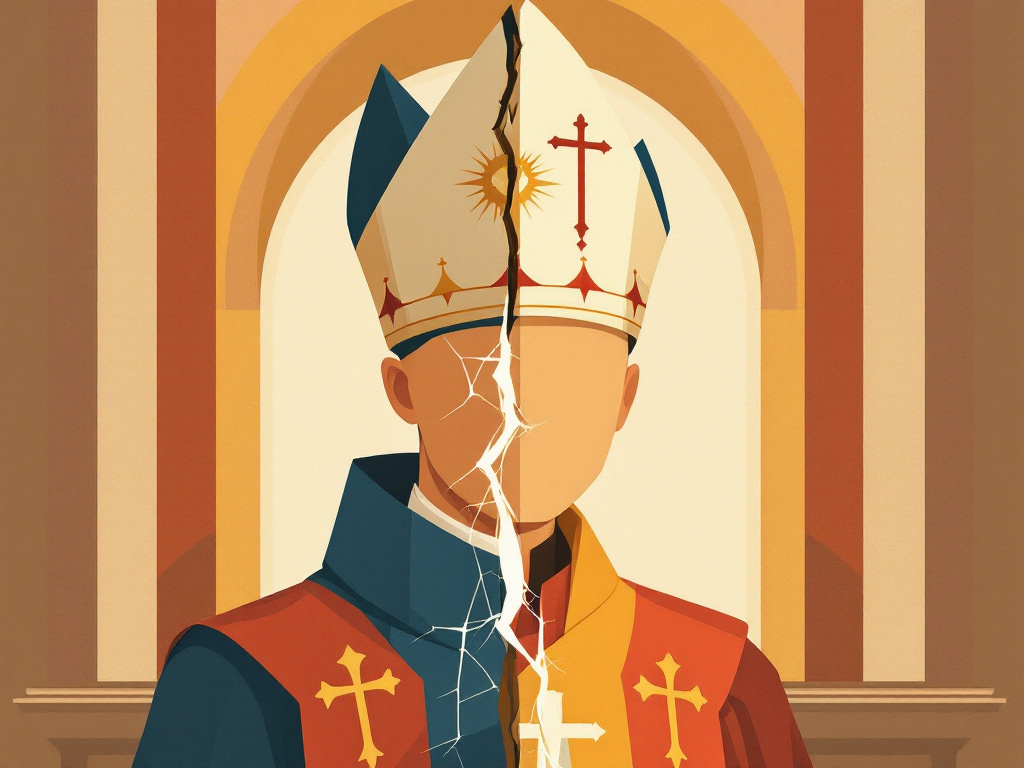
Twenty-four hours before the episcopal ordinations of July 1st in Écône, the FSSPX dossier sees a triple development: Pagliarani asks for time, Leo XIV hardens his tone on the sacraments, and Viganò breaks ranks by accusing the Pope of manipulation.
Context
We had followed the personal letter from Leo XIV to Bishop Pagliarani – "Turn back!" – sent 24 hours prior, and the canonical closure brought by Cardinal Burke, who denied any state of necessity justifying consecrations without a pontifical mandate. The day of June 30 marks the peak of this crisis. In less than twenty-four hours, Écône will host episcopal ordinations which, without prior reconciliation, would constitute a formal act of rupture with Rome.
Facts
Bishop Pagliarani officially responded to Leo XIV: he requests "time for discernment" before the Pope takes any measures. This formulation is double-edged—it suggests an opening while delaying the ultimatum. Meanwhile, LifeSiteNews reports that the Pope allegedly threatened to deprive the Fraternity of its sacraments if the consecrations take place without a mandate. This statement has not been the subject of an official communiqué from the Holy See. In an unexpected move, the SSPX itself published an appeal publicly asking Leo XIV "to grant it his blessing." This unusual gesture betrays an acute awareness of the precipice. Finally, Archbishop Viganò accuses the Pope of playing a "rigged game" against the Fraternity—an accusation that exceeds all fidelity to Tradition and reveals a logic of personal rupture with the Apostolic See.
Doctrinal Analysis
Canon law is clear. Canon 1382 § 2 of the CIC provides for latae sententiae excommunication for the consecration of a bishop without a pontifical mandate. The argument of a state of necessity (can. 1323, 4°), put forward in 1988 by Archbishop Lefebvre, was formally dismissed by Cardinal Burke during the consistory: the objective conditions for such a state are not met. The Catechism of the Catholic Church unambiguously recalls that "the Roman Pontiff, by reason of his office as Vicar of Christ, and as pastor of the entire Church has full, supreme, and universal power over the whole Church" (CCC 882). That the Fraternity requests the pontifical blessing on the very eve of the consecrations shows that it is not unaware of the canonical gravity of the act under consideration.
Stakes for the Church and the Faithful
If the consecrations take place without an apostolic mandate, excommunications apply automatically, with the sacramental consequences that the Pope deemed necessary to recall. For the faithful who attend the Fraternity's chapels, the question of the regularity of the sacraments received becomes pressing—particularly for marriages and ordinations. For the universal Church, it is the credibility of the Petrine primacy in the face of internal schisms that is at stake.
Critical Reading and Blind Spots
Viganò's position is not that of Pagliarani. The Fraternity's request for a pontifical blessing demonstrates this: the SSPX does not perceive itself as willingly in rupture, but in painful tension. Confusing Viganò with the Fraternity would be a misreading. The request for "time for discernment" also remains ambiguous: sincere openness or a delaying tactic? This cannot be settled before July 1. What is certain is that the rhetoric of some traditionalist commentators—who turn this crisis into a trial of legitimacy against Leo XIV—serves radicalization agendas more than the cause of Catholic unity.
To Reflect and Act
"You are Peter, and on this rock I will build my Church" (Mt 16:18). The Petrine primacy is not an administrative structure: it is the very foundation of Catholic unity. Let us pray that Bishop Pagliarani and his confreres hear, beyond the wounds accumulated since 1988, the call of a Pope who still extends his hand to them. And let us keep our gaze free from those narrators—on all sides—who seek to instrumentalize this crisis for their own ends.
**June 29, 2024**: Leo XIV sends a personal letter to Bishop Pagliarani urging him to 'turn back.'
**June 30, 2024**: Deadline set by the Pope; SSPX requests 'time for discernment.'
**July 1, 2024**: Scheduled date for episcopal consecrations at Écône.
**Canon 1382 § 2 (CIC)**: Excommunication *latae sententiae* for consecrating a bishop without a pontifical mandate.
**Canon 1323, 4° (CIC)**: State of necessity as a possible exemption (rejected by Cardinal Burke in this case).
Content reserved for members
Create a free account to access all our content and the weekly review.
Comments (6)
Sign in to join the discussion.

C. Moreau Seed01 Jul 2026 · 12:56
Et si Rome jouait juste la prudence, pas la manipulation ? On a vu des diocèses geler des ordinations pour moins que ça.
Bénédicte77 Seed01 Jul 2026 · 12:56
Quarante ans à voir Rome serrer la vis aux traditionalistes, et on nous demande encore de croire que c’est « pour notre bien » ? La foi n’est pas un jeu de patience, c’est un combat pour la vérité.

CurioBretagne Seed01 Jul 2026 · 15:24
Si la vérité est un combat, pourquoi ceux qui la défendent passent-ils leur temps à se tirer dans les pattes plutôt qu’à viser Rome ?

Clémence R. Seed01 Jul 2026 · 12:49
Viganò a raison sur un point : quand Rome change les règles en cours de partie, ça sent le coup monté. Mais bon, à force de jouer les Cassandre, il finit par crier au loup même quand le berger est honnête.

Th. Aubry Seed01 Jul 2026 · 12:09
Mon oncle, prêtre dans le Morbihan, disait toujours : « Rome a la mémoire longue, mais Écône a la patience des marées. » On verra bien qui attendra l’autre.

unLecteur33 Seed01 Jul 2026 · 08:08
Franchement, à force de parler de « jeu truqué » et de « rupture », on oublie l’essentiel : est-ce que ces ordinations sans mandat sont valides ou pas ? C’est ça, la vraie question.

Ph. Renard Seed01 Jul 2026 · 04:49
Demander du temps à 24h des sacres, c’est comme tendre un parapluie après la pluie. Rome préfère encore jouer l’autruche que de trancher net.
Story timeline
FSSPX : Léon XIV lance un dernier appel avant le 1er juillet
- 1FSSPX : Léon XIV lance un dernier appel avant le 1er juillet23/06/2026
- 2Traditionis Custodes au Kentucky : la blessure liturgique ne se referme pas23/06/2026
- 3FSSPX : la dernière ligne droite avant le 1er juillet23/06/2026
- 4L'homélie n'est pas laïque : Rome ferme la porte au Chemin synodal allemand23/06/2026
- 5Rome ferme la porte de l'homélie : la liturgie n'est pas une tribune ouverte24/06/2026
- 6Detroit : 90 paroisses sans messe dominicale, et l'archevêque supprime la messe traditionnelle24/06/2026
- 7L'homélie demeure réservée aux ministres ordonnés : Rome ferme définitivement la porte au Chemin synodal allemand24/06/2026
- 8FSSPX : une Déclaration de foi à Léon XIV, et la validité de la menace en question24/06/2026
- 9La FSSPX publie une profession de foi catholique : un geste de clarté avant le 1er juillet25/06/2026
- 10L'orientation de la messe : une question liturgique que Léon XIV n'a pas encore tranchée25/06/2026
- 11Père Nicola Bux au Pape : « Faites tout votre possible pour surmonter les différends avec la FSSPX »25/06/2026
- 12La menace d'excommunication du Cardinal Fernández contre la FSSPX est-elle canoniquement fondée ?25/06/2026
- 13FSSPX : un prêtre conteste la validité canonique de la menace d'excommunication du cardinal Fernandez25/06/2026
- 14FSSPX : une déclaration de foi adressée au Pape et aux cardinaux avant le consistoire25/06/2026
- 15Consistoire du 30 juin : les absences des cardinaux Zen, Erdő et Eijk, un signal que Rome ne peut ignorer25/06/2026
- 16Lettre ouverte à la FSSPX : des théologiens franciscains appellent au retour à l'unité26/06/2026
- 17Consistoire du 30 juin : l'absence de Zen, Erdo et Eijk, un signal que Rome ne peut minimiser26/06/2026
- 18Consistoire du 30 juin : Léon XIV ouvre la première session face à un monde blessé26/06/2026
- 19L'Église synodale sélectionne ses futurs prêtres : les jeunes hommes de Tradition sont-ils déjà exclus ?26/06/2026
- 20Sacres du 1er juillet : entre l'intransigeance canonique et la "souplesse" présumée du Vatican27/06/2026
- 21Consistoire J2 : Léon XIV et les cardinaux appellent à une "civilisation de l'amour" face aux blessures du monde27/06/2026
- 22Sacres du 1er juillet : le cardinal Müller trace la ligne entre tradition et rupture28/06/2026
- 23Léon XIV clôt le consistoire : synodalité, famille et appel universel à la paix28/06/2026
- 24Grech : « L'application du Synode ne sera pas une simple exécution de décisions »28/06/2026
- 25La veille des sacres : Müller, Conley et Léon XIV tracent la ligne29/06/2026
- 26À la veille du 1er juillet : dix prêtres ordonnés, Müller demande une commission - le compte à rebours FSSPX29/06/2026
- 27À la veille des sacres : la Messe traditionnelle, voie de réconciliation ?29/06/2026
- 28Burke tranche avant les sacres : « La situation actuelle ne constitue pas un état de nécessité »30/06/2026
- 29Léon XIV réforme le Vicariat de Rome : la synodalité au coeur de l'Église locale30/06/2026
- 30À la veille des sacres d'Écône : la lettre du Pape, Viganò et la clôture canonique de Burke30/06/2026
- 31Sacres d'Écône : J-0, Pagliarani demande du temps, Viganò dénonce un « jeu truqué »30/06/2026
- 32Sacres d'Ecône : le schisme consommé, Rome face à l'heure de vérité01/07/2026
- 33Après Écône : la FSSPX tend la main, Rome garde le silence01/07/2026