Thirty years after Dolly: from cloning to embryoids, man the apprentice sorcerer has not relented
IntelligencesMembers only 1 h ago0Add to bookmarks
We saw, two weeks ago, the birth in Shanghai of human embryoids with a beating heart chamber. Gènéthique reminds us that thirty years ago, Dolly the sheep was born in Edinburgh. The line that goes from one to the other is straight, and it crosses through man.
Context
On July 5, 1996, at the Roslin Institute in Edinburgh, British embryologist Ian Wilmut announced the birth of a sheep named Dolly, the first mammal cloned from an adult somatic cell. The event, revealed to the world in February 1997, opened the door to reproductive cloning of higher mammals. Dolly, sick from a young age, suffering from early arthritis and a pulmonary condition, was euthanized in February 2003. Thirty years later, Gènéthique takes stock: human reproductive cloning remains marginal, but the logic that inspired it has spread in other, more discreet and more vertiginous forms.
The Facts
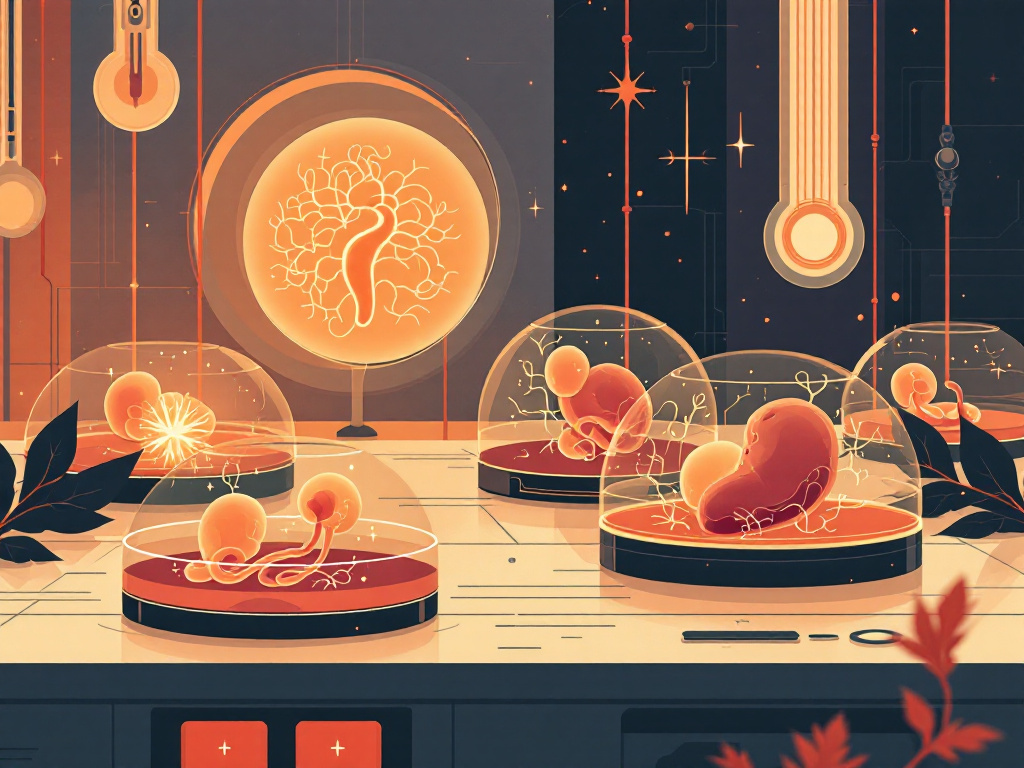
The article, published on July 9, 2026, traces the steps that separate Dolly from contemporary biology: therapeutic cloning mentioned, human embryonic stem cells derived in 1998, induced pluripotent stem cells in 2006. Since 2024, Chinese, British, and American laboratories have produced "embryoids" or synthetic embryonic models, which reproduce the early stages of development without going through fertilization. We had reported, in a previous article, the publication of embryoids with a beating heart chamber in Shanghai in June 2026. These entities escape, in most European legislations, the definition of embryo.
Doctrinal Analysis
The Church has already responded. The Instruction Donum vitae of the Congregation for the Doctrine of the Faith (1987) already posed, in its section devoted to interventions on the human genetic heritage, the principle of the illicit nature of any manipulation of germ cells that does not pursue a strictly therapeutic and respectful purpose of the person. The Instruction Dignitas personae (2008), in paragraphs 28 to 30, devotes its proposal to human cloning: it judges any form, reproductive or so-called therapeutic, precisely because it separates the coming of man from the reciprocal gift of the spouses and instrumentalizes the person from its origin. The Catechism, at no. 2275, had set the line: "It is immoral to produce human embryos intended to be exploited as available biological material."
Stakes for the Church and the Faithful
The cloned man has not come; the embryoid invites itself in his place. The lexical shift is not neutral: not calling an embryo what begins a life is to give oneself license to manipulate it. The anthropological battle is now being fought over the definition. Refusing this dispossession of language is the first task of educated Catholics.
Critical Reading and Blind Spots
Gènéthique documents the mechanism without always drawing the political consequence: European legislations that regulate the embryo but are silent about the embryoid open a breach that natural law must close. The European Commission, seized in 2025 on embryonic models, has not decided; member states legislate in a scattered order.
To Reflect and Act
What begins in the silence of the laboratory ends up in the law. Interpelling our elected officials, supporting the Jérôme Lejeune Foundation, refusing to name otherwise what begins human: three concrete gestures within the reach of the faithful.
Content reserved for members
Create a free account to access all our content and the weekly review.
Article produced by artificial intelligence, reviewed under human editorial control.

Story timeline
Misoprostol alone and Jérôme Lejeune: two visions of man face to face
- 1Misoprostol alone and Jérôme Lejeune: two visions of man face to face23/06/2026
- 2René Frydman admits: commercializing the body means commercializing everything.23/06/2026
- 3**GPA: A coalition of states brings to the UN the call for a global moratorium towards abolition**25/06/2026
- 4Léon XIV and Jérôme Lejeune: "The value of a person does not depend on what they achieve"25/06/2026
- 5PMA: The French Academy of Medicine Against Gamete Importation, or When Reason Joins the Magisterium25/06/2026
- 6Embryoids with Cardiac Chamber: How Far Will Science Go Without Man?29/06/2026
- 7GPA: When the Court of Cassation Erases the Boundary of Natural Law03/07/2026
- 8**GPA: The French Supreme Court Opens the Door to Recognition of Foreign Parentage**04/07/2026
- 9Bioethics: the 2026 General States and prenatal selection, or state eugenics07/07/2026
- 10The Citizens' Convention on Bioethics: the synthesis report maintains the ban on surrogacy09/07/2026
- 11Thirty years after Dolly: from cloning to embryoids, man the apprentice sorcerer has not relented10/07/2026