The Eve of the Coronations: Müller, Conley, and Léon XIV Draw the Line
RomeMembers only Jun 29, 20267Add to bookmarks
The full text of Cardinal Müller's address at the consistory is public. On the eve of the unauthorized ordinations of the SSPX (July 1), Rome is sending multiple signals: revocation of a schismatic priest, pastoral reminder from Bishop Conley, imposition of the pallium. Father Grégoire Masson analyzes this day of the feast of Saints Peter and Paul.
Context
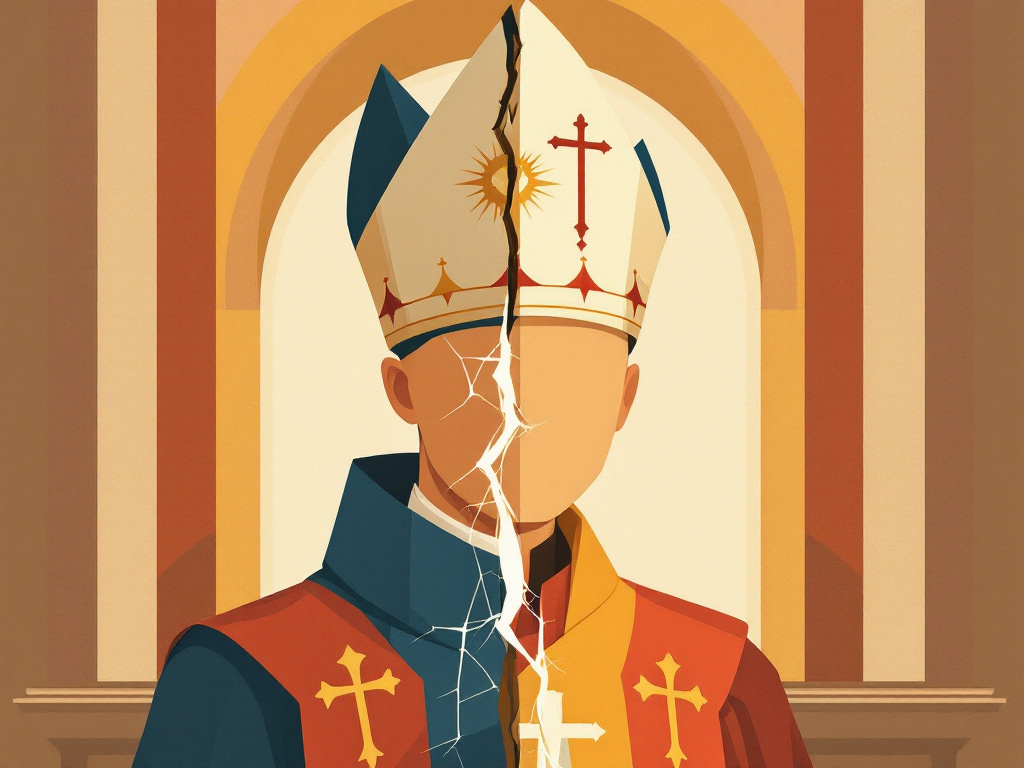
We had reported, during the consistory of June 26-28, on Cardinal Müller's speech distinguishing the legitimate liturgical tradition from the canonical rupture of the SSPX. The full text of this intervention has just been made public (Infovaticana, June 29). Its scope extends beyond the internal framework of the assembly of cardinals: it constitutes an act of magisterial clarification just hours before the unauthorized episcopal consecrations announced for July 1.
On this June 29, the feast of Saints Peter and Paul, Leo XIV imposed the pallium on 35 new archbishops, a symbolically strong gesture of Roman unity at the very moment when fraternal rupture threatens.
The Facts
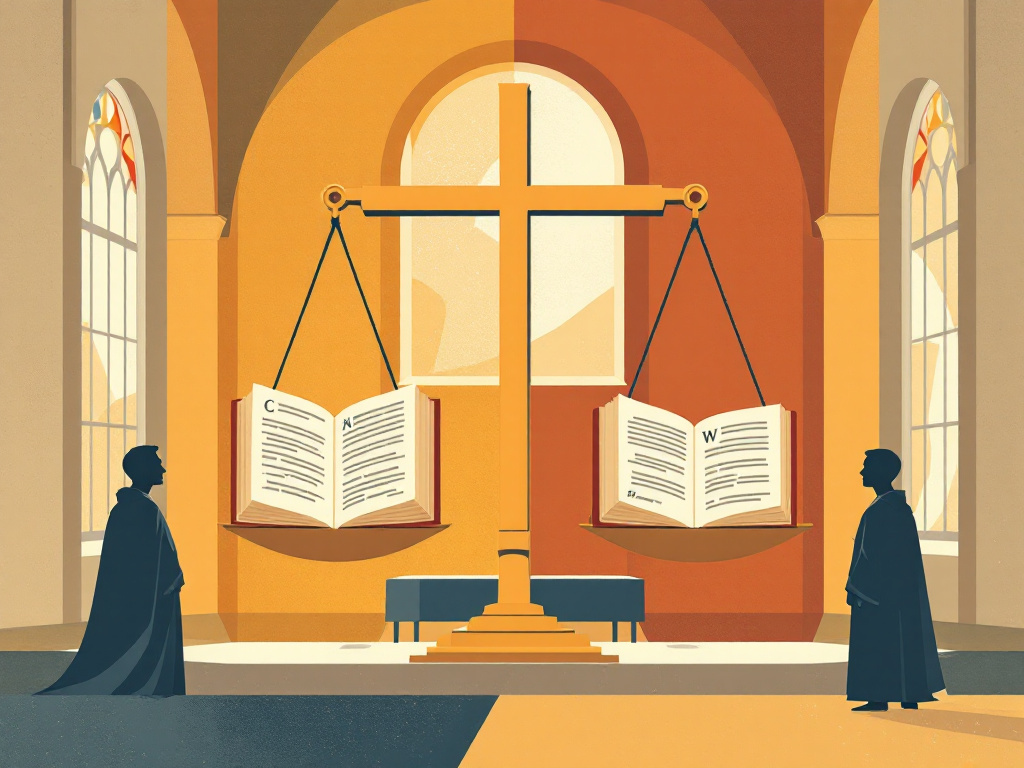
Cardinal Gerhard Müller, emeritus prefect of the Dicastery for the Doctrine of the Faith, defended at the consistory the primacy of the Successor of Peter against any collegial or synodal reduction. He explicitly criticized the synodal format as it tends to function, believing that it cannot substitute for Petrine primacy. Regarding the SSPX, he maintained the fundamental distinction: the traditional Mass is a legitimate treasure of the Church; the canonical rupture consummated by unauthorized consecrations is, however, unacceptable.
In the same vein, Bishop James Conley of Lincoln declared that "the faithful should not be obliged to go to a community separated from Peter to access the traditional Mass." This clear formula summarizes the pastoral issue of July 1: the Society of Saint Pius X offers what Rome, in its view, stubbornly restricts. Bishop Conley's response is both pastoral and canonical: it is Rome that must guarantee access to the ancient rite, not separate structures.
Furthermore, Leo XIV reduced a Spanish priest to the lay state for schism (CNA, June 28), a discreet but real sign of Rome's determination not to let the rupture take hold without canonical consequences. Cardinal Aveline revealed that liturgy was deliberately excluded from the consistory's agenda, not to avoid the issue, but to prevent crystallizing the debate on a question whose pastoral treatment remains open.
Doctrinal Analysis
The question of unauthorized consecrations has been canonically settled since 1988. The latae sententiae excommunication provided for by can. 1382 of the Code of Canon Law applies to the consecrating bishop and the consecrated, unless a pontifical dispensation is granted. Leo XIV granted no dispensation. Müller specifies the decisive theological nuance: attachment to the Mass of Saint Pius V is legitimate and recognized (Summorum Pontificum, 2007), even if Traditionis Custodes restricted its scope. The rupture does not come from the rite: it comes from the refusal of communion with the Successor of Peter.
The First Vatican Council (Pastor Aeternus, DS 3060-3064) defines the primacy of the Roman Pontiff as of divine right, and not as a delegation from the episcopate. It is precisely this point that Müller defends against a collegial reading that would dilute this primacy in the name of synodality.
Stakes for the Church and the Faithful
For Catholics attached to tradition, the consecrations of July 1 raise a question of conscience: can one claim to uphold Roman tradition while breaking with Rome? The response from Müller, Conley, and Leo XIV is unanimous: no. Liturgical tradition, however precious, does not justify canonical rupture. It is the faithful themselves who pay the highest price, finding themselves in a situation of indefinite canonical belonging.
For the Church as a whole, these events reveal the persistent tension between the synodal reform desired by Leo XIV and the resistances, legitimate or not, expressed within it.
Critical Reading and Blind Spots
The SSPX has its own argument based on the state of necessity (can. 1323, §4): Rome, by restricting the traditional liturgy, would have forced the Fraternity to act. This reasoning has its internal logic, but it was explicitly rejected by John Paul II in 1988, then by Benedict XVI and Francis. Leo XIV follows this continuity.
The blind spot of the situation is pastoral: thousands of faithful sincerely attached to the ancient rite risk finding themselves in an untenable canonical situation after July 1. They are the first victims of the rupture. The silence of local episcopates on this concrete point is concerning.
To Reflect and Act
"You are Peter, and on this rock I will build my Church" (Mt 16:18). Tomorrow, July 1, this word will be put to the test. For Catholics attached to tradition: communion with Peter is not one option among others; it is the condition of catholicity. Pray for the Society of Saint Pius X, for its faithful, and that reconciliation may remain possible before the rupture becomes irreparable.
- **Legitimate tradition vs. canonical rupture**: The traditional Mass is a treasure of the Church, but unauthorized consecrations constitute a rupture.
- **Primacy of Peter**: Defended by Müller against synodal or collegial reductions.
- **Pastoral challenge**: Rome must guarantee access to the ancient rite, not separate structures.
- **Canonical consequences**: Excommunication for schism applies to unauthorized consecrations.
- **Blind spot**: The fate of faithful attached to the ancient rite after July 1.
Content reserved for members
Create a free account to access all our content and the weekly review.
Comments (7)
Sign in to join the discussion.

LecteurDuDimanche 29 Jun 2026 · 17:14
Ces sacres me font peur : on dirait qu’on scie la branche sur laquelle on est assis, alors que la sève est la même pour tous.

Ph. Renard 29 Jun 2026 · 13:27
Le cardinal Müller parle de tradition, mais franchement, où est-ce qu’on met le curseur ? C’est pas toujours clair.

unLecteur33 29 Jun 2026 · 13:05
On a beau rappeler les règles, je me demande si ça les fera vraiment changer d’avis. Ça fait des années qu’on tourne en rond comme ça.

sophie.b 29 Jun 2026 · 08:17
On dirait que Rome parle fort mais n’écoute plus. Est-ce qu’un vrai dialogue est encore possible avec ceux qui se sentent rejetés ?

passionné_eco 29 Jun 2026 · 10:23
Rome a raison de rappeler les règles, mais est-ce qu’on écoute vraiment ceux qui se sentent exclus depuis des années ?

Clémence R. 29 Jun 2026 · 08:16
L’unité, c’est beau sur le papier, mais quand on voit ces sacres prévus demain, on se demande si Rome est vraiment écoutée.

Marie47 29 Jun 2026 · 07:40
C’est dur de voir l’Église divisée alors qu’on devrait tous prier ensemble, comme une vraie famille.

CurioBretagne 29 Jun 2026 · 07:33
On dirait que Rome met les points sur les i avant les sacres de la FSSPX… Est-ce que ça va vraiment calmer les choses, ou juste durcir les positions ?
Story timeline
FSSPX : Léon XIV lance un dernier appel avant le 1er juillet
- 1FSSPX : Léon XIV lance un dernier appel avant le 1er juillet23/06/2026
- 2Traditionis Custodes au Kentucky : la blessure liturgique ne se referme pas23/06/2026
- 3FSSPX : la dernière ligne droite avant le 1er juillet23/06/2026
- 4L'homélie n'est pas laïque : Rome ferme la porte au Chemin synodal allemand23/06/2026
- 5Rome ferme la porte de l'homélie : la liturgie n'est pas une tribune ouverte24/06/2026
- 6Detroit : 90 paroisses sans messe dominicale, et l'archevêque supprime la messe traditionnelle24/06/2026
- 7L'homélie demeure réservée aux ministres ordonnés : Rome ferme définitivement la porte au Chemin synodal allemand24/06/2026
- 8FSSPX : une Déclaration de foi à Léon XIV, et la validité de la menace en question24/06/2026
- 9La FSSPX publie une profession de foi catholique : un geste de clarté avant le 1er juillet25/06/2026
- 10L'orientation de la messe : une question liturgique que Léon XIV n'a pas encore tranchée25/06/2026
- 11Père Nicola Bux au Pape : « Faites tout votre possible pour surmonter les différends avec la FSSPX »25/06/2026
- 12La menace d'excommunication du Cardinal Fernández contre la FSSPX est-elle canoniquement fondée ?25/06/2026
- 13FSSPX : un prêtre conteste la validité canonique de la menace d'excommunication du cardinal Fernandez25/06/2026
- 14FSSPX : une déclaration de foi adressée au Pape et aux cardinaux avant le consistoire25/06/2026
- 15Consistoire du 30 juin : les absences des cardinaux Zen, Erdő et Eijk, un signal que Rome ne peut ignorer25/06/2026
- 16Lettre ouverte à la FSSPX : des théologiens franciscains appellent au retour à l'unité26/06/2026
- 17Consistoire du 30 juin : l'absence de Zen, Erdo et Eijk, un signal que Rome ne peut minimiser26/06/2026
- 18Consistoire du 30 juin : Léon XIV ouvre la première session face à un monde blessé26/06/2026
- 19L'Église synodale sélectionne ses futurs prêtres : les jeunes hommes de Tradition sont-ils déjà exclus ?26/06/2026
- 20Sacres du 1er juillet : entre l'intransigeance canonique et la "souplesse" présumée du Vatican27/06/2026
- 21Consistoire J2 : Léon XIV et les cardinaux appellent à une "civilisation de l'amour" face aux blessures du monde27/06/2026
- 22Sacres du 1er juillet : le cardinal Müller trace la ligne entre tradition et rupture28/06/2026
- 23Léon XIV clôt le consistoire : synodalité, famille et appel universel à la paix28/06/2026
- 24Grech : « L'application du Synode ne sera pas une simple exécution de décisions »28/06/2026
- 25La veille des sacres : Müller, Conley et Léon XIV tracent la ligne29/06/2026
- 26À la veille du 1er juillet : dix prêtres ordonnés, Müller demande une commission - le compte à rebours FSSPX29/06/2026
- 27À la veille des sacres : la Messe traditionnelle, voie de réconciliation ?29/06/2026
- 28Burke tranche avant les sacres : « La situation actuelle ne constitue pas un état de nécessité »30/06/2026
- 29Léon XIV réforme le Vicariat de Rome : la synodalité au coeur de l'Église locale30/06/2026
- 30À la veille des sacres d'Écône : la lettre du Pape, Viganò et la clôture canonique de Burke30/06/2026
- 31Sacres d'Écône : J-0, Pagliarani demande du temps, Viganò dénonce un « jeu truqué »30/06/2026
- 32Sacres d'Ecône : le schisme consommé, Rome face à l'heure de vérité01/07/2026
- 33Après Écône : la FSSPX tend la main, Rome garde le silence01/07/2026