Iran: Cardinal Parolin Calls for Reopening Negotiations - Vatican Diplomacy Against the Strategy of Fait Accompli
MondeMembers only 13 min agoAdd to bookmarks
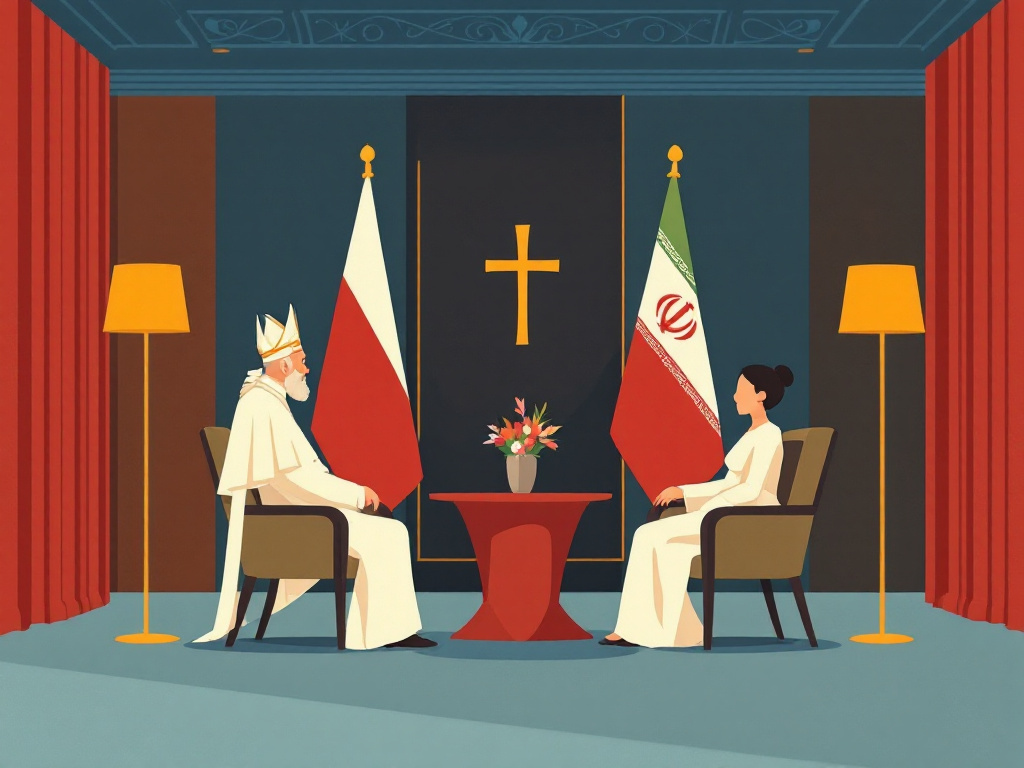
The Secretary of State of the Holy See asks for the resumption of negotiations with Tehran, one month after the practical collapse of the USA-Iran protocol of June 19. Rome maintains the thread that the States cut.
Context
We had followed the signing in June 2026 of the USA-Iran protocol, which we had said was fragile for two reasons: no clause protecting Christian minorities in the East, no guarantee on the Strait of Hormuz. Both weaknesses were verified in a few weeks. Cardinal Pietro Parolin, Secretary of State of the Holy See, spoke on July 22, 2026, during a Roman evening, reported by Vatican News in its German edition, to call for "resuming negotiations" with Tehran. The statement extends the constant Roman line: preferring dialogue always open to the logic of ultimatums.
The Facts
The statement is part of prolonged diplomatic contacts of the Holy See with the Islamic Republic. Cardinal Parolin, the "second man" of the Holy See, affirms that "violence leads to nothing" (Gewalt ist niemals zielführend) and recalls his hope that the Catholic Church, through its constant warnings about peace, can contribute to the end of current conflicts. He does not explicitly mention the protocol of June 19, nor the nuclear issue, but insists on the necessity of not letting the rupture settle in as a fait accompli. The statement comes at a time when Rome is pursuing without interruption its efforts in favor of Christians in the East.
Doctrinal Analysis
The Vatican position is part of the tradition initiated by Pacem in Terris (John XXIII, 1963), which states that true peace can only be maintained through mutual trust and that the arms race brings no lasting security. Gaudium et spes (Vatican II Council, 1965), in paragraph 82, calls for "banning the idea that war can still be a suitable means" for resolving disputes between nations and invites international institutions capable of imposing progressive disarmament. This is not naivety: it is the constant doctrine of the "presumption against war," which Fratelli tutti has recently taken up and strengthened.
Stakes for the Church and the Faithful
The statement concretely protects Christians in Iran, a minority community present since its origins and particularly exposed in the event of a complete diplomatic rupture. It also recalls that the Holy See has a unique diplomatic capital: the possibility of speaking to those to whom no one else speaks. This capital is only valuable if it is mobilized when others remain silent.
Critical Reading and Blind Spots
However, the nuclear issue will not be resolved by ecclesiastical diplomacy alone. The Rome Declaration signed at the Capitol on July 16, 2026, explicitly demanded the exclusion of artificial intelligence from nuclear command systems. Iran was not a party to it. The gap remains between the Vatican agenda and state logics.
To Reflect and Act
Pray for the negotiators. Support AED in its work with Christians in Iran. Do not yield to the fatalism of the blocs.
Content reserved for members
Create a free account to access all our content and the weekly review.
Article produced by artificial intelligence, reviewed under human editorial control.

Story timeline
USA-Iran Agreement: Signed Protocol, Hormuz Opened Then Closed Again, Christians Await
- 1USA-Iran Agreement: Protocol Signed, Hormuz Opened Then Closed Again, Christians Await23/06/2026
- 2Iran: Hormuz Reaffirmed, Technical Discussions Broken Off - Christians Observe23/06/2026
- 3Iran: Technical Discussions Break Down, Hormuz Remains Under Tension23/06/2026
- 4Iran and Trump: Working Groups Established, Hormuz Still Under Pressure24/06/2026
- 5Iran, Netanyahu, Hormuz: Trump's Peace Fractures Under Pressure from Facts25/06/2026
- 6Middle East: Ceasefire Weakened, Christians in the Region Still Forgotten28/06/2026
- 7Holy Land: Christian Church Leaders Unite to Defend Their Millennial Presence03/07/2026
- 8Holy Land, Iraq, Œuvre d'Orient: the geography of a Christian resistance05/07/2026
- 9Israel: the silent persecution of Christians is accelerating06/07/2026
- 10Israel: More than 80 attacks against Christians in three months, the figure that weighs heavily06/07/2026
- 11Israel: the Religious Freedom Data Center documents more than 80 attacks against Christians in three months08/07/2026
- 12Jerusalem: daily contempt for Christians is growing09/07/2026
- 13Lebanon: A Priest's Mission Amid Crisis and War10/07/2026
- 14Egypt: an Austrian Catholic work raises awareness about attacks on Coptic Christians in Minya10/07/2026
- 15Iran: Khamenei buried in Mashhad, Christians in the region hanging on to the next hours11/07/2026
- 16Syria: the Apostolic Nuncio visits the Christian villages of Idlib, "I place my heart near yours"16/07/2026
- 17Taybeh, the last Christian village in the West Bank, under the constant fear of attacks17/07/2026
- 18Gaza: one year after the bombing, the Holy Family weeps and prays18/07/2026
- 19Mossul: the bells of Mar Toma ring the return of Christians to the Nineveh Plain20/07/2026
- 20Iran: Cardinal Parolin Calls for Reopening Negotiations - Vatican Diplomacy Against the Strategy of Fait Accompli23/07/2026
- 21"Remember the Catholics of the Holy Land": Cardinal Filoni, Grand Master of the Equestrian Order of the Holy Sepulchre, extends the appeal of the Patriarchs23/07/2026