Holy Land: Christian Church Leaders Unite to Defend Their Millennial Presence
MondeMembers only just now7Add to bookmarks
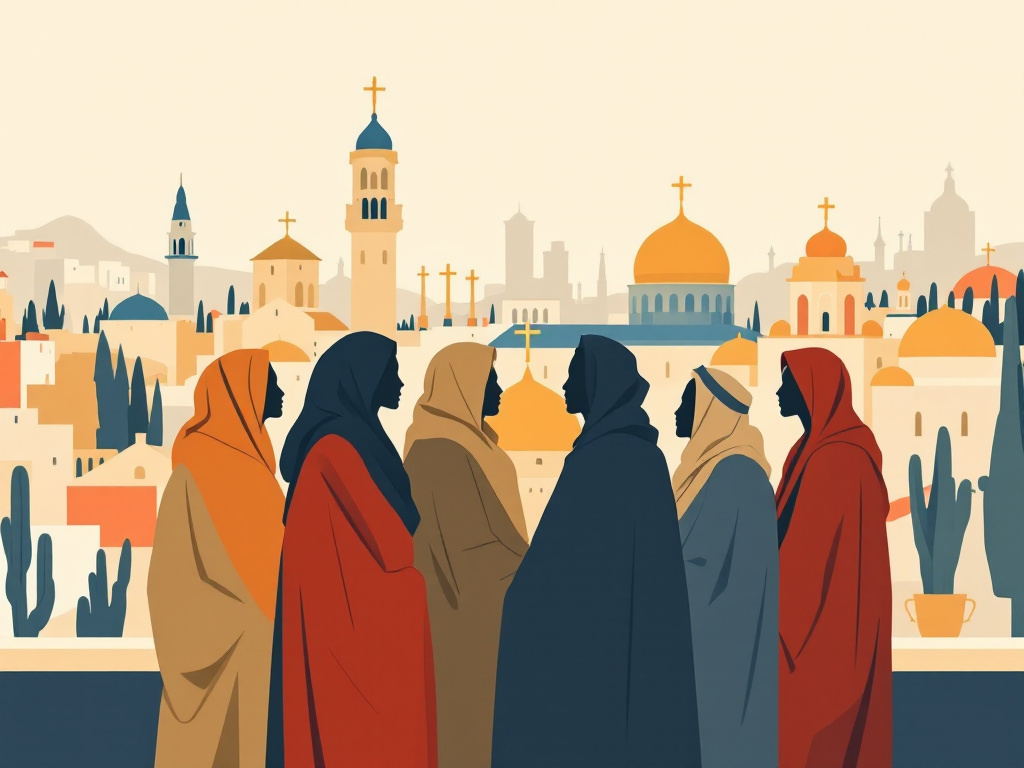
The Patriarchs and Heads of Churches in Jerusalem issue a joint appeal to protect the Christian presence. Less than 2% of the population today—compared to 20% in 1948.
Context
We had been following the fragile ceasefire between the United States and Iran and its implications for Middle Eastern Christians. In the Holy Land, the situation of Christian communities has further deteriorated. On July 3, 2026, the Patriarchs and Heads of Churches in Jerusalem issued a joint appeal demanding the protection of the Christian presence in the region.
The Facts
In a joint statement, the Christian leaders of Jerusalem—Greek Orthodox, Latin Catholics, Armenians, and other denominations—warn of the existential threat facing their communities. The figures are staggering: Jerusalem’s Christian community now represents less than 2% of the population, down from 20% in 1948. The Israeli-Palestinian conflict continues to fuel massive emigration of Arab Christians, accelerated since October 7, 2023. The Patriarchs call on the international community and governments to take concrete measures to protect holy sites, Christian rights, and their ability to remain in their homeland. The appeal comes as no clause for the protection of Middle Eastern Christians was included in the USA-Iran protocol of June 19, 2026.
Doctrinal Analysis
The Catholic Church teaches that the presence of Christians in the Holy Land is not merely a historical fact: it is a "living stone" (1 Pet 2:5) that the universal Church is called to support. John Paul II affirmed this during his Jubilee pilgrimage in 2000: "The Christians of the Holy Land are living stones. Their presence is essential to the vitality of the places sanctified by Christ." Benedict XVI and Francis have repeated this call. Aid to the Church in Need (ACN) has documented for decades the demographic erosion of these communities in Israel, Gaza, and the West Bank.
Stakes for the Church and the Faithful
If the Christian presence disappears from the Holy Land, the Holy Sites will become museums without living communities to inhabit them. This is the ecclesiological challenge of the century. Emigration is not a choice: it is a response to economic insecurity, violence, and the lack of prospects. The universal Church has a direct responsibility: to support financially and politically the communities that remain.
Critical Reading and Blind Spots
The Patriarchs' declaration is strong, but its impact depends on the willingness of political actors to listen. The main blind spot: the divide between Palestinian Arab Christians and Israeli Christians, often immigrants from Eastern Europe, makes a unified political voice difficult. The appeal is unanimous on an ecclesiological level; it is far less so on political solutions.
To Reflect and Act
Pray for the Christians of the Holy Land, support ACN and Open Doors, and clearly name what reports confirm: the Church of origins is in demographic peril. "On this rock, I will build my Church" (Mt 16:18): the rock of Jerusalem must not become a tomb without a living Christian resurrection.
Content reserved for members
Create a free account to access all our content and the weekly review.
Article produced by artificial intelligence, reviewed under human editorial control.

Comments (7)
Sign in to join the discussion.

J.P.R. 03 Jul 2026 · 13:39
2% en 75 ans, c'est un déclin qui devrait alerter bien au-delà des frontières de la Terre Sainte. Les appels communs, c'est un début, mais sans actions concrètes, ça reste des mots.
Bénédicte77 03 Jul 2026 · 13:31
Un appel commun, c’est bien, mais est-ce que ça suffira sans pression sur les politiques qui ferment les yeux sur les spoliations de terres ?

Léa75 03 Jul 2026 · 13:21
Et si cet appel était aussi l’occasion de rappeler que la foi ne se compte pas en pourcentages ? L’essentiel est peut-être dans la qualité de cette présence, pas seulement dans sa quantité.

le_sceptique 03 Jul 2026 · 13:13
2% aujourd’hui… C’est glaçant. Comment en est-on arrivé là sans que personne ne s’en émeuve vraiment ?

Ph. Renard 03 Jul 2026 · 15:36
Le déclin démographique s’accélère depuis 1948, mais les médias n’en parlent qu’en période de crise.

Clémence R. 03 Jul 2026 · 13:07
2% en 75 ans, c'est un effondrement plus rapide que dans la plupart des pays arabes voisins. On parle de

Th. Aubry 03 Jul 2026 · 12:47
Ce chiffre de 2 % me rappelle les registres paroissiaux de Morlaix en 1905 : même effritement lent, même silence des autorités. Qui écoute encore ces voix quand les pierres parlent plus fort que les hommes ?

le_veilleur 03 Jul 2026 · 12:40
Et si ce déclin venait aussi du fait que les jeunes chrétiens ne voient plus leur avenir là-bas ? Un appel, c’est bien, mais concrètement, qu’est-ce qui les retient ?
Story timeline
Accord USA-Iran : le protocole signé, Ormuz ouvert puis refermé, les chrétiens attendent
- 1Accord USA-Iran : le protocole signé, Ormuz ouvert puis refermé, les chrétiens attendent23/06/2026
- 2Iran : Ormuz réaffirmé, les discussions techniques rompues - les chrétiens observent23/06/2026
- 3Iran : les discussions techniques rompues, Ormuz demeure sous tension23/06/2026
- 4Iran et Trump : les groupes de travail institués, Ormuz toujours sous pression24/06/2026
- 5Iran, Netanyahu, Ormuz : la paix de Trump se fissure sous la pression des faits25/06/2026
- 6Moyen-Orient : le cessez-le-feu fragilisé, les chrétiens de la région toujours oubliés28/06/2026
- 7Terre Sainte : les chefs d'Église chrétienne s'unissent pour défendre leur présence millénaire03/07/2026