Iran and Trump: Working Groups Established, Hormuz Still Under Pressure
MondeMembers only Jun 24, 20261Add to bookmarks
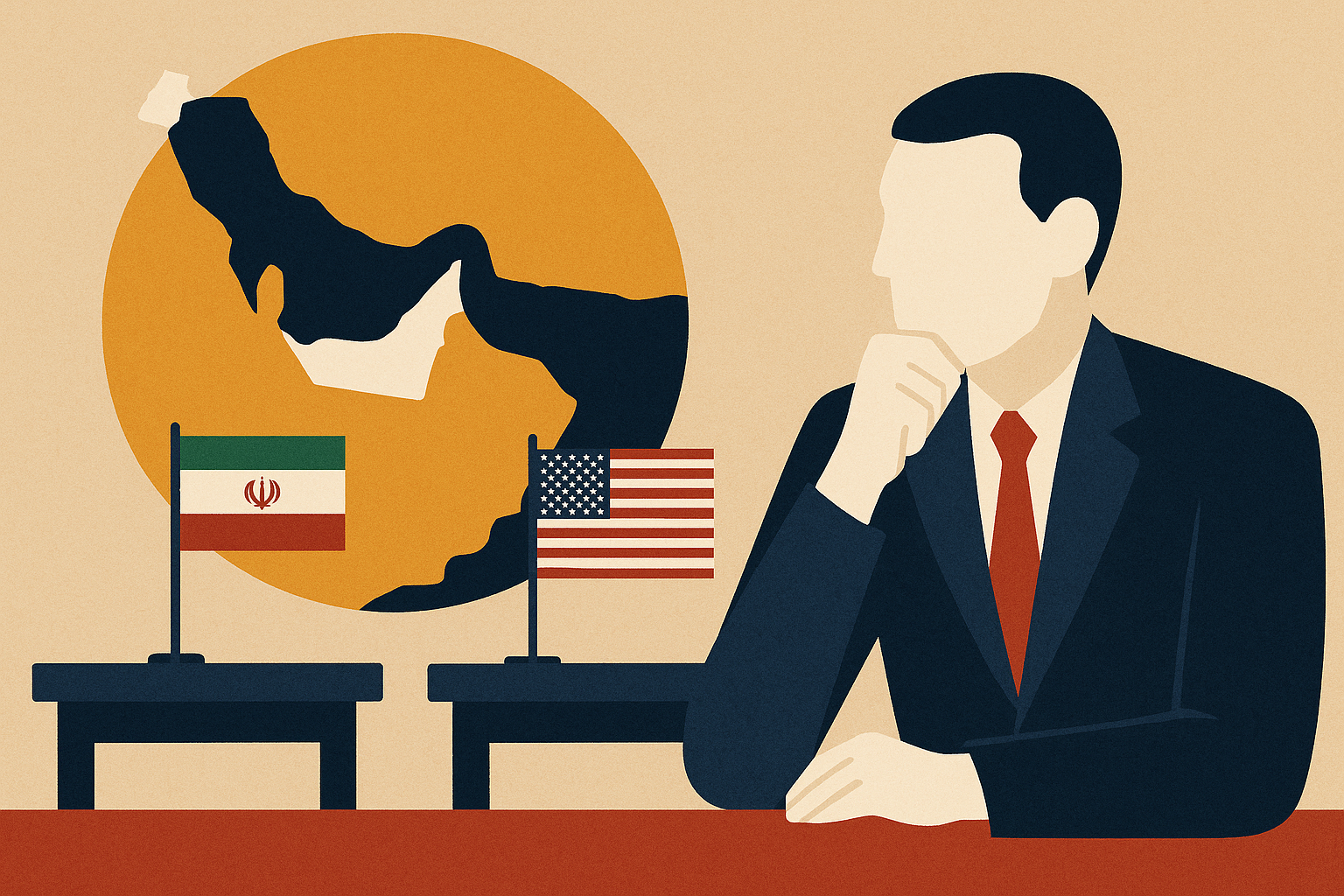
Technical discussions between Iran and the United States in Switzerland led to the creation of four working groups. However, the Iranian negotiator reaffirmed Tehran's authority over the Strait of Hormuz. Meanwhile, Trump criticized Congress for demanding the withdrawal of his forces. Pierre-Antoine Vasseur analyzes this Gordian knot for the region's Christians.
Context
In our previous editions, we followed the signing of the USA-Iran agreement protocol and the tensions around the Strait of Hormuz. The week of June 23, 2026, brings new developments: technical consultations in Switzerland have concluded, Iran has structured its position, and the U.S. Congress is attempting to reclaim control from the executive branch.
The Facts
Iranian negotiator Mohammad Bagher Ghalibaf claimed control of the Strait of Hormuz following technical consultations in Switzerland (La Croix, June 23, 2026). These discussions led to the formation of four working groups between Iran and the United States. The nature and precise mandate of these groups have not been made public.
Simultaneously, the U.S. Congress adopted a symbolic resolution calling for the withdrawal of American forces engaged against Iran. Donald Trump condemned this resolution, defending the unauthorized presence of his troops in the conflict (Le Figaro, June 24, 2026). The constitutional tension between Congress and the White House over war powers adds a dimension of instability to an already complex issue.
Doctrinal Analysis
The Strait of Hormuz, through which approximately 20% of the world's oil supplies transit, is a global common good. No one can legitimately claim to use it as a lever for unilateral economic pressure. The Church's social doctrine reminds us that natural resources and strategic communication routes fall under the universal common good (Gaudium et Spes, no. 69). Iran's claim over the Strait of Hormuz contradicts this principle.
For Christians in Iran and the region, the issue is not geopolitical in the technical sense: it is a matter of survival. A diplomatically weakened Iran may ease pressure on its religious minorities—particularly the Chaldean Catholic community and evangelical Protestants, who face systematic persecution. Conversely, an Iran emboldened in its regional claims may intensify such pressures.
Stakes for the Church and the Faithful
The Christian minority in Iran is estimated at fewer than 200,000 people (out of 87 million inhabitants), including members of historic Armenian and Assyrian Churches and evangelical communities converted from Islam. The latter are particularly vulnerable: conversion from Islam is punishable by death under Iranian law.
ACN (Aid to the Church in Need) closely monitors the situation of Christians in Iran. Recent reports highlight arrests of Protestant pastors and church closures. Any diplomatic thaw between Washington and Tehran must be assessed in terms of its impact on these communities.
Critical Perspective and Blind Spots
The working groups established following the technical discussions could be a step forward or a smokescreen. Without the publication of their mandate and timeline, it is impossible to evaluate them. The diplomacy of "procedure"—creating structures without defining binding objectives—is a classic tactic in stalled negotiations.
The Congress resolution, though symbolic, signals a serious constitutional concern. War powers in the United States constitutionally belong to Congress (Article I, Section 8). Military engagement against Iran without a formal declaration of war is a legal dispute that Trump prefers to ignore.
Reflection and Action
Christians in the region—Iran, Iraq, Lebanon, Syria—have for decades paid the price of geopolitical balances negotiated by great powers without their input. Including them in our prayers and concrete solidarity is a duty of the universal Church.
The Strait of Hormuz, between Iran and Oman, is the only maritime passage linking the Persian Gulf to the Indian Ocean. Approximately 20% of the world's oil and 25% of liquefied natural gas transit through it. Its control is a major strategic issue.
Content reserved for members
Create a free account to access all our content and the weekly review.

Comments (1)
Sign in to join the discussion.

Marie47 24 Jun 2026 · 12:17
Quatre groupes de travail, d'accord, mais est-ce que ça changera vraiment quelque chose sur le terrain ? On prie pour la paix, mais les déclarations, ça ne remplace pas les actes.
Story timeline
Accord USA-Iran : le protocole signé, Ormuz ouvert puis refermé, les chrétiens attendent
- 1Accord USA-Iran : le protocole signé, Ormuz ouvert puis refermé, les chrétiens attendent23/06/2026
- 2Iran : Ormuz réaffirmé, les discussions techniques rompues - les chrétiens observent23/06/2026
- 3Iran : les discussions techniques rompues, Ormuz demeure sous tension23/06/2026
- 4Iran et Trump : les groupes de travail institués, Ormuz toujours sous pression24/06/2026
- 5Iran, Netanyahu, Ormuz : la paix de Trump se fissure sous la pression des faits25/06/2026
- 6Moyen-Orient : le cessez-le-feu fragilisé, les chrétiens de la région toujours oubliés28/06/2026