Pope Francis in Castel Gandolfo: "Let us not let the winds of war extinguish hope"
Rome 1 h ago0Add to bookmarks
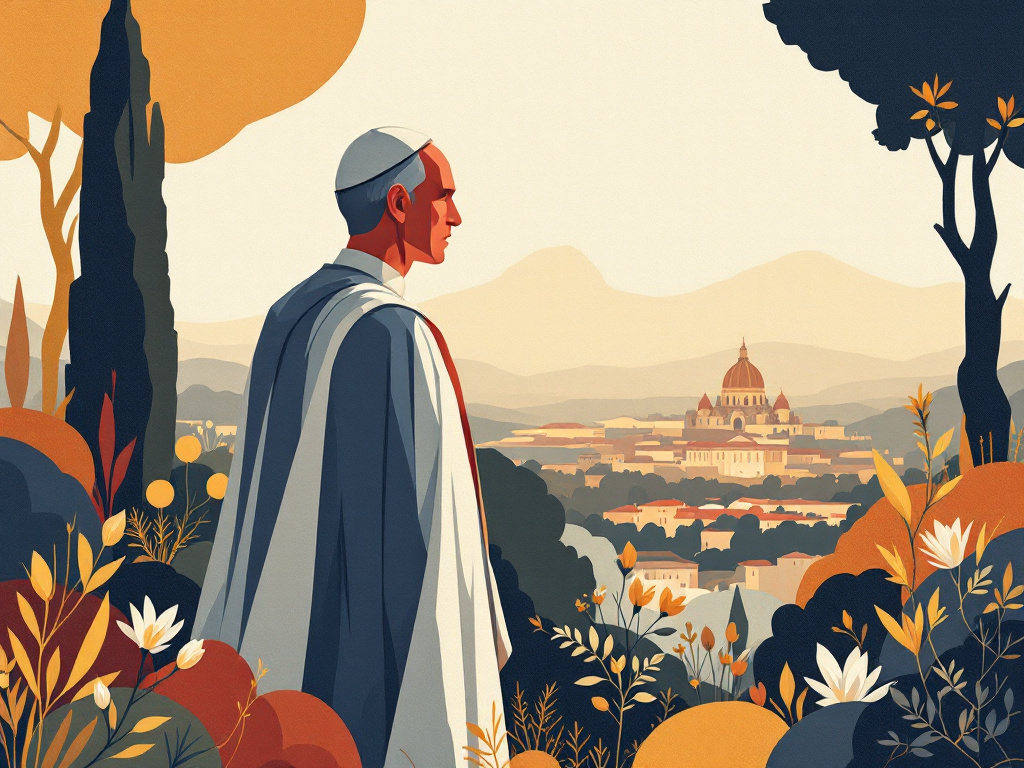
Angelus of July 12, 2026: the Pope meditates on the parable of the sower, then launches an appeal on the Persian Gulf and Ukraine.
The Fact
Sunday Angelus on July 12, 2026 from Castel Gandolfo. Leon XIV first commented on the parable of the sower (Mt 13, 1-23), emphasizing God's generosity who never ceases to sow His Word despite our hardenings. Then, in his post-Angelus appeal, he issued a cry about the international situation: "Let us not allow the winds of war to extinguish the flame of hope and the path of dialogue." The Pope mentioned the resumption of bombings in the Persian Gulf and the ongoing war in Ukraine, calling for a return to diplomatic channels.
Our Reading
We had followed his first gestures: Lampedusa on July 4, the call to builders of communion addressed to the FABC, the preparation for Paris. This Sunday's Angelus belongs to the same fabric. The Pope does not leave the scene in the summer: Castel Gandolfo is not a retreat, it's an observation post. The summer villa becomes what it has long been under Pius XII and Paul VI, a place from where the Successor of Peter watches over the fronts where hope wavers.
This dual register is significant. On the one hand, the meditation on the sown Word: Leon XIV inscribes himself in a patient pedagogy, one that refuses to measure God's fruitfulness by the standard of our immediate failures. On the other hand, a public word on conflicts. The Pope joins here the constant doctrine of the apostolic see. John Paul II said in 2003: "War is always a defeat for humanity." Leon XIV takes up the sharpness without the emphasis.
To Meditate
Hope is not a climate but a theological virtue (CCC n. 1817). It does not protect itself from the winds, it anchors itself in Christ. This week, in our parishes, let us pray for peace in union with the Holy Father. Naming the fronts is already refusing their trivialization.
Article produced by artificial intelligence, reviewed under human editorial control.
Story timeline
Paris Awaits the Pope: Ten Thousand Volunteers for a Historic Encounter
- 1Paris Awaits the Pope: Ten Thousand Volunteers for a Historic Encounter23/06/2026
- 2Synod: Three Days of Work with Continental Bodies – Collegiality Put to the Test23/06/2026
- 3**"Magnifica humanitas": The Encyclical of Leo XIV, a Magisterial Act That Marks Minds**23/06/2026
- 4Léon XIV in Pavia: Builders of Peace, Not Hate24/06/2026
- 5Léon XIV before Paris: Eucharist, Pavia, and Consistory – Three Gestures Preparing the Visit24/06/2026
- 6Léon XIV for the Feast of Saints Peter and Paul: "Every Christian is called to be a builder of unity"29/06/2026
- 7Léon XIV in Lampedusa on July 4: The New Pope's First Italian Gesture02/07/2026
- 8Léon XIV in Lampedusa: In the Footsteps of Francis, a Pope Facing the Mediterranean03/07/2026
- 9Léon XIV in Lampedusa: Francis' Founding Gesture, Prolonged04/07/2026
- 10Lampedusa: Leo XIV repeats the founding gesture before Paris05/07/2026
- 11Pope Francis in Castel Gandolfo: "Let us not let the winds of war extinguish hope"12/07/2026