Bock-Côté and Dandrieu: Can We Still Be Joyful in a World That Is Collapsing?
Intelligences Jun 24, 20264Add to bookmarks
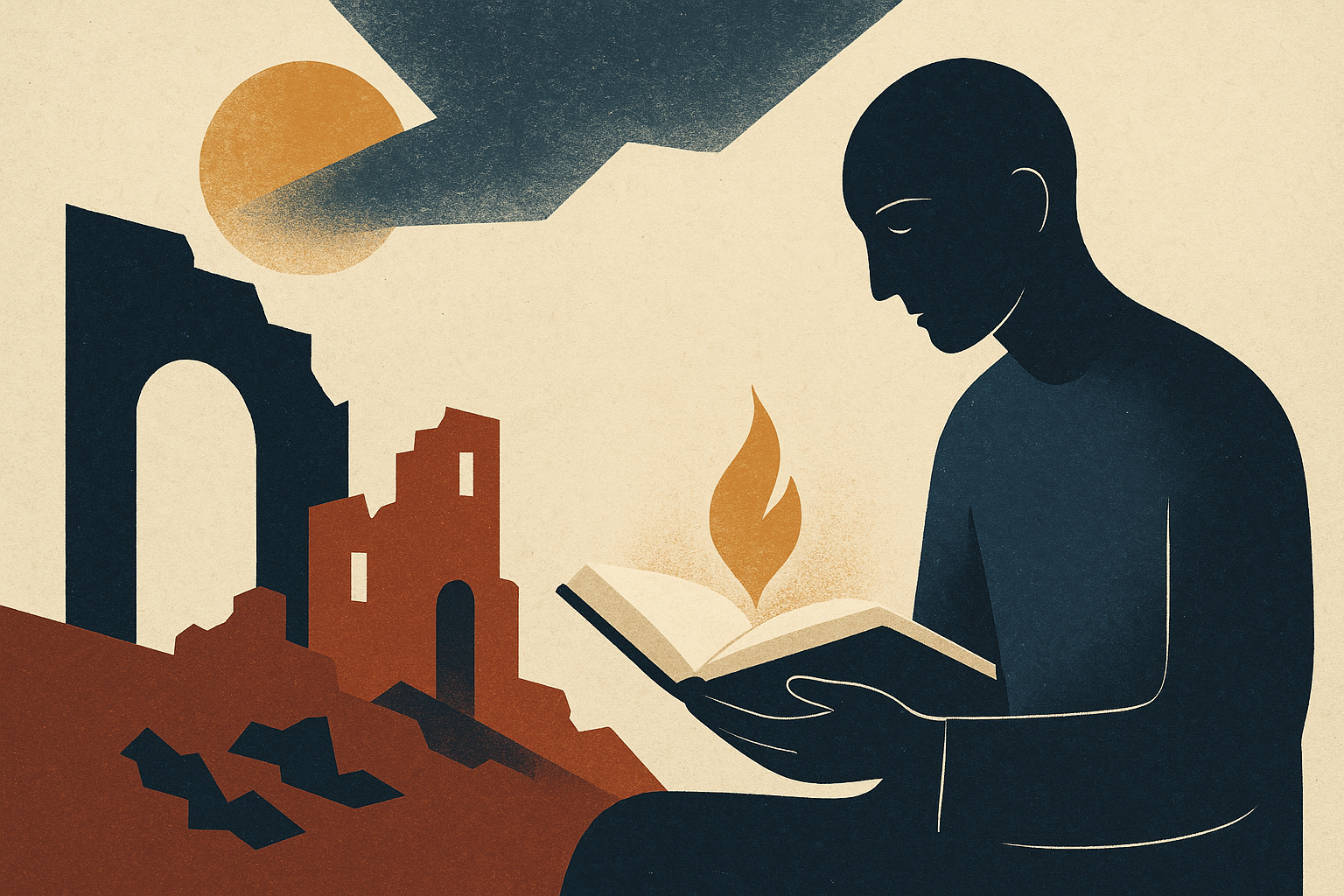
Mathieu Bock-Côté and Laurent Dandrieu debated a question that is not trivial: should one be a joyful pessimist? Marie-Thérèse Bonnet examines this intellectual stance in the light of Christian anthropology: between lucidity about reality and theological hope, the difference is not one of degree—it is one of nature.
The Fact
In the columns of Le Salon Beige (June 23, 2026), Mathieu Bock-Côté and Laurent Dandrieu engaged in a conversation about what they call "joyful pessimism." These two intellectuals, close to Catholicism and sharing a common diagnosis of the decline of Western civilization, raise a real question: how to endure in a world that is unraveling while maintaining a certain lightness of being?
Our Perspective
The phrase presents a philosophical problem. Pessimism, in the strict sense, is a metaphysical position: history tends toward irreversible deterioration. Joy is then merely a subjective reaction—the humor of the condemned. Christianity offers something else: hope, a theological virtue based not on an analysis of historical trends, but on a promise. "I am with you always, until the end of the age" (Matthew 28:20). This promise does not make the world visibly better—it gives meaning to commitment despite the darkness. Saint Thomas distinguishes despair—a sin against hope—from prudent fear, which is wisdom. One can be lucid about the state of civilization, name its cracks, without concluding that all is lost. It is this distinction that "joyful pessimism" tends to blur.
To Ponder
The Christian response to a world unraveling is neither the stoicism of disaster nor the humor of shipwreck. It is the commitment of charity, rooted in the certainty that history has a meaning beyond our analyses—even the most pertinent ones.
You have made us for Yourself, O Lord, and our heart is restless until it rests in You.

Comments (4)
Sign in to join the discussion.

Léa75 25 Jun 2026 · 20:39
La joie dans les épreuves, c’est pas juste une question de résistance, c’est une façon de dire que le mal n’aura pas le dernier mot.

le_sceptique 25 Jun 2026 · 08:44
J’ai l’impression qu’on complique trop les choses : la joie, c’est pas une théorie, c’est ce qu’on vit quand on fait confiance malgré tout.

passionné_eco 25 Jun 2026 · 08:23
La joie chrétienne, c’est pas une question de constats, mais d’espérance. Même quand tout s’écroule, on sait que le Christ a déjà gagné.

C.M. 24 Jun 2026 · 17:12
Cette idée de joie malgré tout, ça me parle. C'est comme si on nous disait : même quand tout va mal, on peut encore choisir d'espérer.
Story timeline
IA qui s'améliore seule : Anthropic face au gouffre qu'elle a contribué à ouvrir
- 1IA qui s'améliore seule : Anthropic face au gouffre qu'elle a contribué à ouvrir23/06/2026
- 2Bock-Côté et Dandrieu : peut-on encore être joyeux dans un monde qui s'effondre ?24/06/2026
- 3Le Saint-Siège à l'ONU : l'éthique doit gouverner l'IA dès le départ, pas après coup24/06/2026
- 4Le cardinal Marx contre le transhumanisme de Musk : quand l'Église répond à la démesure de la Silicon Valley27/06/2026
- 5Le Vatican se dote d'une Commission interdicastérielle sur l'intelligence artificielle28/06/2026