Ten Years of Brexit: Worsened Poverty, Conditional Reconciliation, a Warning for Europe
EuropeMembers only Jun 23, 20262Add to bookmarks
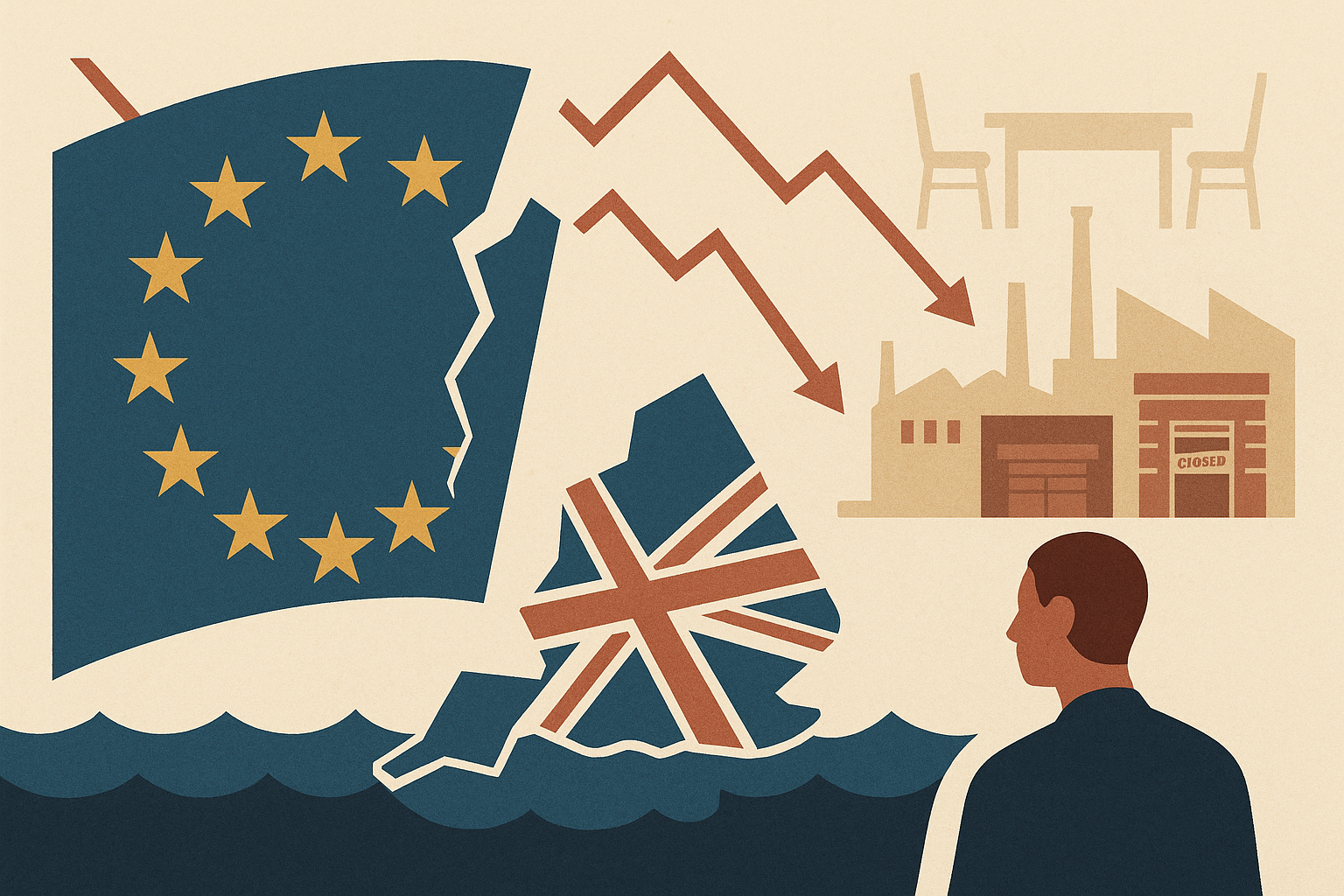
On June 23, 2016, the United Kingdom voted to leave the European Union. Ten years later, the assessment is severe: increased poverty, sluggish growth, political instability. Brussels is opening the door to a rapprochement, under conditions. François-Xavier Lemoyne draws lessons from this decade for the future of Europe and for Catholics.
Context
June 23, 2026, marks the exact tenth anniversary of the referendum that led the United Kingdom to leave the European Union. This vote, won by 51.9% in favor of Leave, has resulted in a decade of painful negotiations, political turbulence (five Prime Ministers in ten years), and economic disillusionment for a large part of the British population. The time has come for a review, but also for outlining an uncertain future.
The Facts (Cross-Referenced Sources)
La Croix documents a harsh social reality: poverty in the United Kingdom has worsened since Brexit, particularly in the industrial regions of the North that had nevertheless massively voted Leave. Michel Barnier, the EU's chief negotiator for Brexit, delivers a lucid warning to Le Figaro: "The Brexit warning is that we must heed popular concerns." The EU now says it is in favor of rapprochement with London, under precise conditions regarding worker mobility, regulatory alignment, and participation in the internal market. David Cameron, whose failed referendum gamble fractured a country and a generation, lives in semi-retirement far from the media spotlight.
Doctrinal Analysis
The Social Doctrine of the Church (Compendium of the DSE, nn. 433-435) encourages the building of political communities based on subsidiarity and solidarity. Brexit illustrates the tensions between these two founding principles: the national subsidiarity invoked by Leave supporters has paradoxically led to weakening the United Kingdom's ability to protect its most vulnerable citizens against economic shocks. Gaudium et Spes (n. 74) reminds us that the political community must aim for the effective common good of its members, not an abstract sovereignty that is satisfying in theory but flawed in practice.
Challenges for the Church and the Faithful
The Catholic Church is present on both sides of the Channel. COMECE (Commission of the Bishops' Conferences of the European Community) has regularly reminded that European construction, when at the service of the human person and the common good, deserves the support of Catholics. The ongoing rapprochement between London and Brussels raises a concrete question for the faithful: will British Catholics, often of Irish, Polish, or Filipino origin, regain facilitated rights of movement in continental Europe? The answer will depend on the upcoming negotiations.
Critical Reading and Blind Spots
The media debate around the Brexit anniversary remains dominated by economics and political spectacle. The anthropological and social dimension (the divide between working classes and metropolitan elites, between generations, between geographical areas) is under-analyzed. Barnier's warning hits the mark: a democracy that does not heed the anxieties of its people produces shock votes with lasting consequences. The European Union must learn this lesson, particularly in the face of rising sovereignist movements in Italy, France, or Hungary. A rapprochement with the United Kingdom only makes sense if the EU is first capable of reforming its own relationship with its citizens.
To Ponder and Act
Ten years of Brexit have not produced the promised "Global Britain." They have produced a more unequal nation, more fractured, more uncertain of its future. The ongoing rapprochement is not a return: it is a pragmatic attempt to limit the damage. For Catholics: support the work of COMECE so that Europe remains a space of human dignity, real subsidiarity, and concrete solidarity, and not just a market.
- **51.9%**: Share of Leave votes in the 2016 referendum
- **5**: Number of Prime Ministers since 2016
- **2.1 million**: Estimated jobs lost due to Brexit (Bank of England, 2025)
- **£290 billion**: Cumulative cost of Brexit to the UK economy (Office for Budget Responsibility, 2026)
*Father Michael O’Reilly, 62, parish priest in Sunderland (a city that voted 61% Leave in 2016):*
« The parish food bank has doubled its activity since 2016. The young people I confirm no longer dream of studying in Paris or Berlin. They dream of a stable job, here, in a city that has lost its factories. The Church is trying to hold things together, but the social fabric is fraying. »
Content reserved for members
Create a free account to access all our content and the weekly review.

Comments (2)
Sign in to join the discussion.

Ph. Renard 24 Jun 2026 · 11:23
Dix ans après, on voit surtout les problèmes, mais ils ont quand même réussi à signer des accords commerciaux sans Bruxelles. C’est pas rien, si ?

Léa75 24 Jun 2026 · 07:10
Dix ans après, ce sont les Anglais les plus pauvres qui paient l’addition. Les restos du cœur débordent, et ça se voit plus que les discours à Bruxelles.
Story timeline
Brexit 10 ans : le bilan d'un divorce européen
- 1Brexit, dix ans après : l'Europe face à ses propres fractures23/06/2026
- 2Dix ans de Brexit : une pauvreté aggravée, un rapprochement conditionné, un avertissement pour l'Europe23/06/2026
- 3Brexit, dix ans après : la tentation du retour et ses conditions impossibles23/06/2026
- 4Brexit, dix ans après : le retour est possible, mais à quel prix pour qui ?24/06/2026