Bishop of Northampton charged with child rape: a new earthquake for the Church of England
MondeMembers only Jun 25, 20260Add to bookmarks
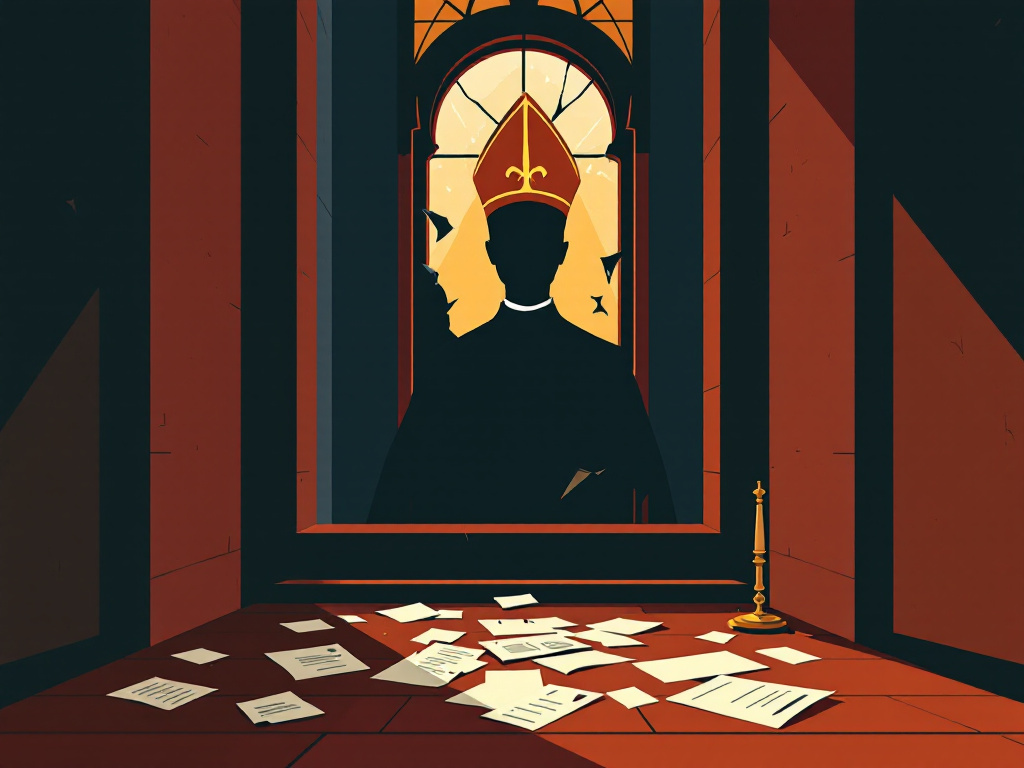
An English Catholic bishop has been charged with child rape. The indictment is confirmed by the Crown Prosecution Service. The Church of England is facing another upheaval.
Context
The Catholic Church in England is once again shaken. According to Catholic News Agency (25 June 2026), the Catholic bishop of the Diocese of Northampton, Bishop David James Oakley, has been formally charged with child rape by the Crown Prosecution Service (CPS). The charge—rape of a minor—is the most serious accusation that British criminal law can bring in cases of sexual abuse. The bishop has been suspended from his episcopal duties pending legal proceedings.
The Facts
The indictment was made public on 25 June 2026. The CPS confirmed two counts of rape of a minor following an investigation by Northamptonshire Police. The Holy See was notified in accordance with the procedures set out in the De gravioribus delictis norms (revised in 2021), which reserve canonical treatment of serious crimes committed by clerics, including sexual abuse of minors, to the Dicastery for the Doctrine of the Faith (Art. 6 § 1, 1°). These same norms require ecclesiastical superiors not to obstruct the action of competent civil authorities.
Doctrinal Analysis
Sexual abuse committed by a cleric is a delictum gravius under the motu proprioSacramentorum sanctitatis tutela (John Paul II, 2001) and its subsequent revisions. Canon law provides for a penal procedure—administrative or judicial—that may result in dismissal from the clerical state (can. 1336 § 1, 5°). The Church cannot invoke any privilege of forum against civil justice in these matters. The CCC (nn. 2477-2478) recalls that the presumption of innocence is a right of every person—including an accused cleric. But it also reminds that scandal is a grave fault when it leads others to sin or lose faith (nn. 2284-2287).
Challenges for the Church and the Faithful
The shockwave reaches English Catholics, already weakened by successive revelations documented by the Independent Inquiry into Child Sexual Abuse (IICSA, 2022 report). For the faithful, the question is no longer just one of individual fault but of the robustness of prevention systems put in place over the past twenty years. The Catholic Church in England and Wales published a revised Safeguarding framework in 2023, the effectiveness of which is once again being questioned. On an ecclesial level, an indictment at the episcopal level is of particular gravity: the bishop is in persona Christi for his diocese. His fall directly wounds the entire body of the local Church.
Critical Perspective and Blind Spots
The indictment is not a conviction. The presumption of innocence applies. Resistance to any form of media lynching must be maintained before civil—and canonical—justice has had the final say. This does not preclude transparency, which is both a moral requirement and a pastoral necessity to restore the trust of the faithful. The Church must support potential victims, ensure their access to justice, and communicate clearly—without haste but without concealment.
To Reflect and Act Upon
« If anyone causes one of these little ones who believe in me to sin, it would be better for them to have a large millstone hung around their neck and to be drowned in the depths of the sea » (Mt 18:6). These words of the Lord remain the absolute standard. Let us pray for the victims. Let us demand truth and justice—without haste, but without complacency.
Content reserved for members
Create a free account to access all our content and the weekly review.